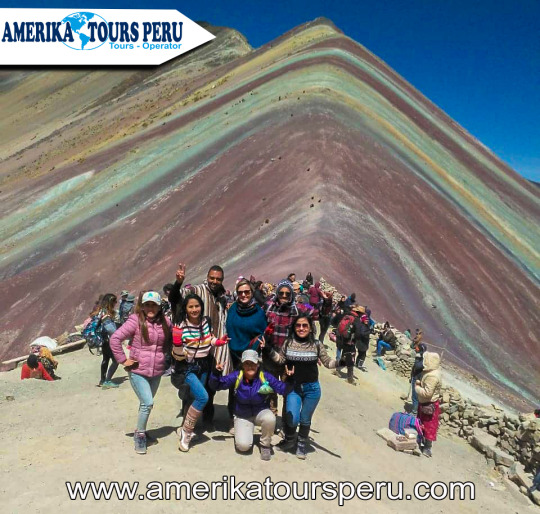
We will start first with the pick-ups starting at 3:00 am (private service) and at 4:00 am (pull service) where we will pass by your hotels, after concluding the pick-ups we will travel for a time of 1 hour and a half to our restaurant (Cusi pata), along the route we can see the sacred river or willcamayu river, which is part of the sacred valley of the Incas. Upon arrival at the camp we will have a rich breakfast (buffet), then we will take the transport again to continue with the tour for 1 hour and arrive at the bus station, where the trek to the mountain of 7 colors (5029m) will begin, Our guide will give you a talk and recommendations to reach the top, after 4km of walking (2 hours), we will reach the top and we will be able to appreciate all the natural attraction of the area, we will have a talk with the guide about why the colors and landscapes in the area and then we will organize the trip to the red valley (optional) to appreciate the beautiful landscape that it offers (5089m), then take the return route to the bus station, once the whole group in the transport, we will return to the camp to have lunch (buffet), and then return to the city of Cusco at approximately 18:00 pm. Rainbow Mountain
Unlike the Inca Trail, the Salkantay trek can be done without a tour, on your own and without a tour guide. To make this walk you must take all necessary precautions.
Follow these recommendations to make the Salkantay trek on your own:
Book the Machu Picchu tickets in advance before making the Salkantay trek. Otherwise, you can return without knowing the Wonder of the World.
The route to follow is the same as the Salkantay trek with tour. The journey on your own may take more or less days, depending on the visitor's ability.
The first step is to reach the town of Mollepata from the city of Cusco. Cars are taken at the ‘Arcopata’ bus terminal, in the city of Cusco.
From Mollepata the ascent begins. It is advisable to carry what is strictly necessary (food for 5 days and sleeping equipment) to avoid carrying excessive luggage. What to wear for the Salkantay trek?
Sleeping bags.
Cap or hat
Trekking shoes
Trekking backpack
Waterproof jacket
Trekking pants
Poncho for the rain.
Canteen with water.
Water purifying tablets.
Sunscreen.
Personal toiletries.
Snacks
Cash.
What does a tour to Salkantay trek include?
In general, tours to Salkantay trek include the following:
Transportation by train from Aguas Calientes to Ollantaytambo.
Bus from Ollantaytambo to Cusco.
Horses to transport luggage (5 kilos).
When is the best time to do the Salkantay trek?
The best time to visit Machu Picchu is in the dry season (from April to October). During those months, there is less chance of rain so the roads are in better condition.
In the dry season, however, the days are sunnier and the nights colder. According to mountaineering experts, June, July and August; It is the best time to do the Salkantay trek. Tips for the Salkantay trek Acclimatize one or two days in the city of Cusco before performing the Salkantay trek. Avoid alcoholic beverages or high fat meals. The altitude sickness or soroche in Salkantay and Machu Picchu is one of the greatest difficulties. Perform some exercise prior to Salkantay trek. You don't need to be in excellent physical shape but a little exercise will help. No matter what part of the year, he wears warm clothes during the Salkantay trek. The nights are especially cold in the first two days. Plan up to the smallest detail the Salkantay trek on your own.
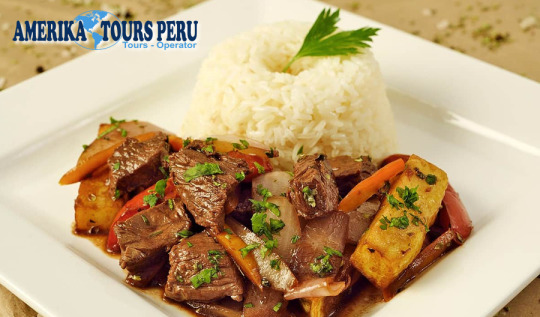
The lomo saltado is a typical dish of Peruvian cuisine. Its origin dates from the end of the nineteenth century, where it was known as "beef tenderloin", "sauteed lomito", "lomito a la chorrillana" or "lomito al juice". It is considered one of the best dishes in Peru.
This delicious dish comes from two cultures: the Chinese and the Peruvian, where it has been able to balance a perfect flavor and color. It is made with beef tenderloin, red and Chinese onions, yellow pepper, sherry and Sillao.
Know the origin of the loin sauteed from Peru Recall that the Chinese began to arrive in Peru in a massive way in 1849, where they brought their condiments and sauces that they sold on the well-known Capón Street in the Center of Lima.
Also, Lomo Saltado is found in all menus of Peruvian restaurants in Miami and in the world, it has become the flagship dish, in addition to ceviche. Without a doubt, it has become a positive contribution to the gastronomic culture of Peru.
It should be noted that the Inca Garcilaso de la Vega reports that the first cattle arrived in Peru in 1538 and when the meat began to be sold it was too expensive. However, it was gradually falling in price. He also states that the first cows should have arrived shortly after the conquest, and that they took time to sell.
The best Lomo Saltado! For this reason, there are not many Peruvian dishes with beef. The sauteed loin is a product of the influences of Chinese culture, which has given very important contributions to the culinary culture of Peru.
Also, Gastón Acurio said in an interview: “It has Inca, Spanish and especially Chinese influence. It has the Asian technique of the pan and sauteed in cooking, giving rise to what we know now as sauteed loin, accompanied by potatoes on a separate plate, in the 40s. Five decades later the potato is incorporated in a single presentation ”.
Today, the sauteed tenderloin is found in the menu of all Peruvian restaurants in the world. Without a doubt, the sauteed loin is one of the most representative dishes of Peruvian cuisine. It is a dish that without the contribution of oriental food, would not have been possible to make.
Contact us: Tours In Cusco
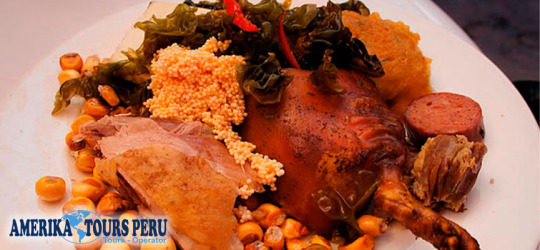
he Cusco region, being one of the most recognized destinations, has an indigenous cuisine due to the use of protein-rich products from the area such as: corn, different meats such as alpaca, guinea pig, lamb, pork, etc.
The essence of culinary miscegenation has made the Cusco cuisine well positioned before our visitors.
"Chiri Uchu" This name comes from the union of two Quechua words: Chiri which means "COLD" and Uchu which means "AJI" so we can understand what it is: Aji (or spicy) cold, this is the flag dish of the region of Cusco in the celebration of Corpus Christi.
History:
The chronicles of Pedro Sarmiento de Gamboa, who in 1572 spoke of the "strange" combinations of ingredients that the ancient Peruvians made in the kitchen, suggest that this stew has an Inca origin; especially of the chaskis (young athletes who traveled from one place to another carrying certain messages), since they carried their food in their ch’uspa (purse) and therefore tended to eat it cold.
It is also presumed that he was born of the Aynis (Reciprocal Work System among family members), since at the end of the work day each Ayllu (Family Community) shared the best of his meal with others, thus forming a mixture of foods.
With the arrival of the Spaniards, customs and traditions were replaced with religious traditions, just one of them was the “Corpus Christi”, a Catholic holiday that brings together patron saints and virgins of all the parishes of the city; This is how Chiri Uchu becomes part of the European fusion with Andean traditions.
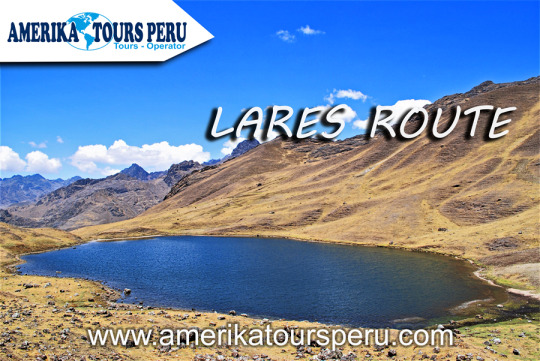
When you go to the Lares Trek Valley, you are impressed because this trip is very beautiful for the eyes, due to its mountains, its landscape, its ravines, its spectacular sky, the people and their clothes, particularly one is amazed.
The Lares Valley is located in the Sacred Valley of the Incas, on the way to Machu Picchu, making a detour in the town of Calca to undertake the trip to the Lares Valley, in Calca one can make a stop to buy supplies, with water , cookies and fruit, you can also enjoy a delicious breakfast in the main market of the town of Calca, it is advisable to leave early
Lares has allowed maintaining the nuance of its Andean people although it is located not far from the Sacred Valley, this valley is very pleasant to walk, experiential tourism, and take a dip in its hot springs as well as the bathrooms Hot springs of Machu Picchu, if one does the Lares trekking it is usually 4 days, including Machupicchu this is the most common that travelers do.
The thermal baths in the valley of Lares, said baths have a separate mention since the one that goes to Lares goes to the thermal baths, I am baths are medicinal and relaxing and are characterized by their color and their smell, the color of yellowish color and a smell of sulfur since these waters probably come from some volcano, particularly it is not known exactly where they come from, Lares thermal baths are very hygienic and are contained in pools made of very well treated stones these pools are cleaned daily and maintain a cleanliness at the height of the visitor.
The Qhapaq Ñan, is the word that defines the road system of the Inca Civilization and is definitely the best material test, which can give us an idea of the magnitude of this empire, becoming one of the greatest achievements in indigenous America. An estimated 23 thousand km is calculated, although other studies say that up to 40 thousand km could be registered, from an extensive network of roads, built on one of the most rugged territories in the world, which communicates the cities and settlements of the state most important in America, before the Spanish invasion.
This network of roads crossed the Empire of the Incas, along roads drawn from north to south (from end to end) along the coast, mountains and jungle; through the Cordillera de los Andes, with small sections, which communicated from the east of its territory to the Pacific coast. Designed in harmony with the topography of the place, wide in some areas, very narrow in others, with completely cobbled sections and others simply of land.
Like all the important cities of the Empire, the city of Machu Picchu, connected to Cusco (capital of the Empire), through the Inca Trail that we have traveled so far, at least two important accesses to the Sacred City (Inca Trail and Camino Salkantay), although there may be two others; one that descended through the Urubamba valley from Ollantaytambo, and another that crossed the high part of the Andes. And together with these, a complex network of secondary roads, to communicate the existing settlements throughout the region.
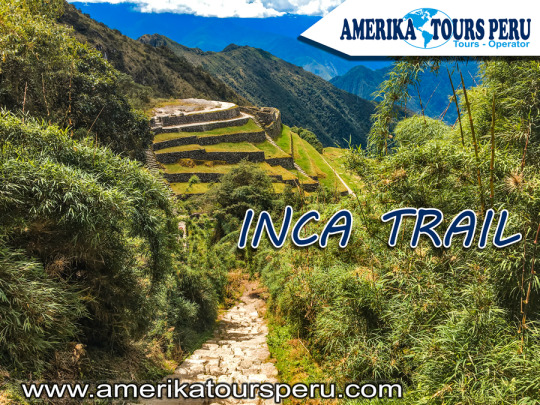
The world-famous Inca Trail to Machu Picchu, is only part of this complex network of roads, which goes up the Urubamba River basin to the Inca City, named for being the most suitable name. At present it is considered by many, the most beautiful of all, for the complement present between its landscapes and its history, you can visit it in three or four days, on a perfectly planned tour.
This Inca Trail to Machu Picchu, allowed to join production sites, with storage and administration centers. It is located in the middle of the jungle, which provides adequate environmental conditions for the production of specific foods. It is very likely that the entire Empire was supplied from this area. Therefore, this road articulated Machu Picchu with the capital and this with the other cities.
The gigantic network of roads of the Inca empire (Qhapaq Ñan) was built with the main purpose, to keep a huge territory communicated, this allowed to mobilize armies very quickly for the time. But it had other very important uses, as it served as trade routes, acting as an economic articulator, in a civilization with a tendency to redistribution and exchange, in the same way that Machu Picchu's corn or coca reached Huánuco, In Huánuco, surplus production (potatoes and others) was redistributed in other locations, such as Machu Picchu. Another extremely important purpose was the representation of the central power of the empire, as it was thought ideologically; -Yes, I know Cusco because I have seen the road- Then, the road was the essential ideological representation of the power of the Empire, both economic and ideological.
This path, a means of communication and transport par excellence, fundamental in economic articulation and ideological dissemination, was essential for the existence of such a vast territory. It crossed the central squares of the main towns of the Empire, joining places of worship, commerce and administration, passing through water sources, an element (fundamental for life) that symbolized the goodness of Mother Earth and the reproduction of life.
And despite the information available, the Inca Trail is only a small branch of the Empire's road network, an important tourist attraction in Peru and one of the largest in the world. Although the fact in itself, of knowing new places, what we offer is fantastic, goes beyond a visit to the Machu Picchu Sanctuary in Peru; We offer an approach to the culture of the people who built those places, to the people who currently inhabit those places, their customs and their history. So you can transform visible material evidence into an experiential learning experience.
The Sacred Valley for the Incas With the river feeding the valley, its fertile lands were one of the main centers of food production during the time of the Incas; Some places, such as Moray, were used as agricultural laboratories, to experiment with species of plants brought from across the empire. The Incas cultivated potatoes, white corn, coca, fruits and vegetables, on terraces like those that can be seen in many valley villages specially designed for this purpose. Today the valley produces lucuma, peach, avocado, and one of the best corn grains in the world.
But it was more than just an important agricultural center; The Urubamba River Valley, "Willcamayu" for the Incas, was one of the most important elements in the religious cosmology of the Incas. They believed that the flow of the Urubamba was closely linked to constellations and mountains, they also believed that it was the counterpart of the milky way on earth.
information: Machu Picchu Tour
Where is the Sacred Valley of the Incas? The Urubamba river valley or "Sacred Valley of the Incas", is located 15 km northeast of the city of Cusco, is reached by a paved road. A trip by car to one of the nearest villages will take around 40 minutes. From there you can move to the other villages in the valley. What is the weather like in the valley? The Sacred Valley of the Incas is 2,800 m.s.n.m., 600 meters below Cusco, and enjoys one of the best climates in this region, daytime temperatures vary between 19 ° and 24 ° C. This privileged climate made the Incas take it as their main center of agricultural production, experimentation and research. Nowadays, travelers use the valley to acclimatize themselves, before starting their tours through Cusco and Machu Picchu, and without a doubt one of the best ways to avoid altitude sickness. What to see in the Sacred Valley of the Incas? Known by the Incas as Willcamayu, the beautiful valley extends from the town of Pisac to Ollantaytambo, along the Urubamba river. The ancient Inca settlements in these cities are presented as checkpoints, before entering the "Inca Trail" that leads to the sacred city of the Incas, Machu Picchu; They are simply amazing, and one of the best before what you will see in wonder. Pisac The town of Pisac is located 33 kilometers from the city of Cusco and is presented as the door to the Sacred Valley. It is world famous for its craft market and its impressive archaeological remains, located on a mountain above the town. This town was a kind of capital of the region in the time of the Incas, very important for its excellent location and its fertile lands. The Inca and colonial constructions that are exhibited in its territory, are admirable for its great bill and for the platforms that surround the mountains and polished stone structures, assembled to perfection. On the other hand, the people of Pisac has become the spiritual center of the Sacred Valley, in it you can have all kinds of experiences and spiritual retreats, in addition to meeting people from all over the world interested in this. Urubamba Urubamba is one of the most important cities in the valley today, it is a city that was born during the colony and is considered the world capital of corn. This is possible because it is watered by numerous rivers that are born in the peaks of the glacial mountains; This whole territory was highly appreciated by the Incas due to the fertility of their lands and the great qualities for cultivation. It is one of the best places to relax in the valley, you will see many foreigners, but beware, they are not tourists, they are people who left their countries and decided to stay in this cozy town. Ollantaytambo Ollantaytambo, also known as Ollanta, is located 97 km northwest of the city of Cusco; approximately 2 hours and 30 minutes by car. It was during the time of the Incas a fortified city, with temples, urban, agricultural and defense walls. It is known that the Inca city of Ollantaytambo served as an administrative checkpoint. After the Spanish invasion, it became one of the favorite places of the viceroys. It is considered one of the most important archaeological sites in Peru and South America; In addition, many people consider that after Machu Picchu, the town and the ruins of Ollantaytambo contain the most impressive Inca stone work in Peru; However, it is not the only amazing thing about this place. Only a few years ago, global positioning systems allowed us to discover that Ollantaytambo is aligned with other ancient constructions throughout the world; the pyramids of Gíza, the Easter islands, the Nazca lines, are just some of them; In addition, the most important archaeological remains around the world are aligned around this line. We recommend you visit the Inca city of Ollantaytambo, otherwise, you will be missing out on something very big. Chinchero On a normal tour of the Sacred Valley of the Incas, the town of Chinchero will be the one you will visit after touring most of the valley, back to Cusco; It is located 28 km from the city of Cusco at 3,772 m.a.s.l. and it has important archaeological sites, a beautiful 17th-century colonial church with canvases of the "Cuzqueña School", and a typical market where bartering can still take place.
Forced by circumstances - competition, mass tourism - Cusco operators point to the south, whose quality destinations are only visible. However, years ago, visionary agencies such as Pukupuku Travel (Facebook Pukupuku Travel) explored that territory and positioned new routes long before the Sacred Valley overcame. http://bit.ly/amerikatoursperu
Needless to say, we did not enjoy the cosmopolitan Cusco night, because at 4 in the morning he picked us up from the Ricardo Reátegui Hotel (T. 959136848), one of the top guides in the region. It was cold in Huayqui, the starting point, but as soon as we started beating for a majestic puna we went into heat. We do not cross any tourist, only shepherds taking care of their flocks, and this route is more for travelers in search of spirituality drowned in commercial tours.
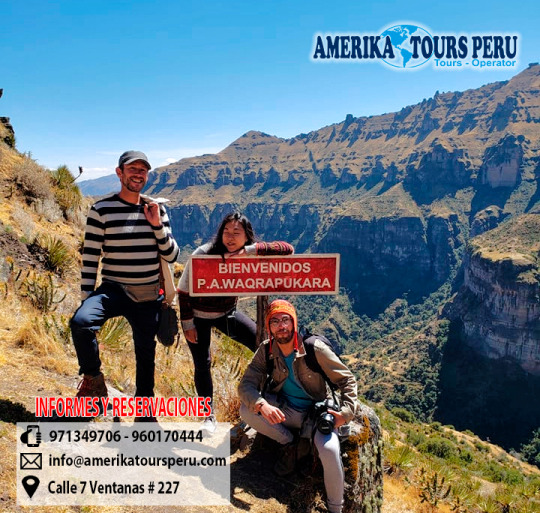
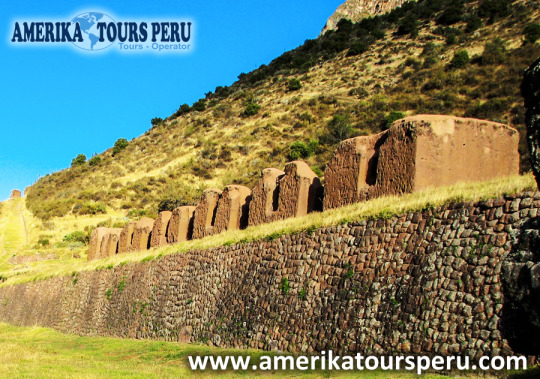
Suddenly, an amazing hollow interrupts the altiplanic plain. With astonishment, the archaeologist Miguel Cornejo tells him, who investigated the place in 2010: “Before entering Waqrapukara, you reach a space formed by river and wind erosion. The whole natural environment warns that a special place, out of the ordinary, of incomparable beauty is being reached ”.
The abyss that forms the Apurimac River is the cherry of the cake and makes Waqrapukara (4,104 m.a.s.l.) one of the most spectacular landscapes in the Andes. Inca architects molded their buildings to geography. "It is a first-class Inca sanctuary, which denotes immense political and religious power not yet deciphered," adds Cornejo.
“AMERIKA TOURS PERU” welcomes you. We have for you private and group tours. Our main goal is to always provide quality service, so customer satisfaction is our best reward.
AMERIKA TOURS PERU, offers you various treks, hikes, tours and holidays in Cusco which include the Classic Inca Trail as well as several alternative treks. For details see Inca Trail to Machu Picchu and Alternative Inca Treks around Cusco. Also available other tours in different parts of Cusco, how Choquequirao y Ausangate. MISSION Be the first tour company local, national and internationally recognized for excellence in the provision of tourist services and in meeting the needs of our customers and prospects. VISION Provide excellent travel service with reliability, responsibility, punctuality and safety.
We will pick you up from your Cusco hotel at 5.00 am in our transport, and then drive for 2 hours to Curahuasi (2909 m. / 9543 ft.), village where we will have breakfast, and then we continue to Capuliyoc, we arrive to nice view point called Capuliyoc (2915 m. / 9561 ft.), from here, we will have the privilege to see spectacular views of Padriyoc and Wayna Cachora snowcapped peaks (mountains over 5400 m.). At this point we will have some time to enjoy our snacks and we take some pictures of the breathtaking views of the river and the canyon stretching down the valley. From here we will descend through a unique zigzag path for 2 hours more to reach our place for lunch. Finally around 1 pm. we will have lunch. You have time to relax, put your feet up and have some refreshing tea, before we get ready to hike again for 2 hours more descending, so, we will reach our campsite located at Chiquisca (1836 m. / 6023 ft.) around 5 pm. where we will spend the night.
DAY 2: CHIQUISCA – MARAMPATA – CHOQUEQUIRAO RUINS
After our breakfast, we will leave early, throughout the day we will see a wide variety of bromeliads, orchids and stands of bamboo; we’ll also hope see birds such as Andean Quetzals, Toucans an a variety of hummingbirds. From our campsite we walk around 1 hour in order to descend to the bottom of the Canyon, called Playa rosalina and the magnificent Apurimac river (1550 m./ 5084 ft). From here we will begin probably the hardest section of the path due to the ascension; 2 hours steep climb to Santa rosa (2095 m. / 6873 ft.) where We will have time to take a refreshing break. From Santa rosa we will continue uphill for another 2 hours towards marampata (2913m / 9557ft), a flat ground where we can have a break and enjoy the views of Apurimac Canyon and the famous Inca site of Choquequirao. Here We’ll have lunch and take advantage of the facilities (toilets and wash room).After lunch We will continue to hike for another one hour to reach our campsite which is located just outside of the Great Inca Site Choquequirao (3110 m. / 10120 ft.) and We will spend the late evening in the ruins, where we will see a very nice sunset over mountains, and if we may be lucky enough to spot Condors soaring nearby over the valley below. Camping at Choquequirao campsite (bathrooms and cold water showers are available).
DAY 3: CHOQUEQUIRAO RUINS – CHOQUEQUIRAO PASS – MAIZAL
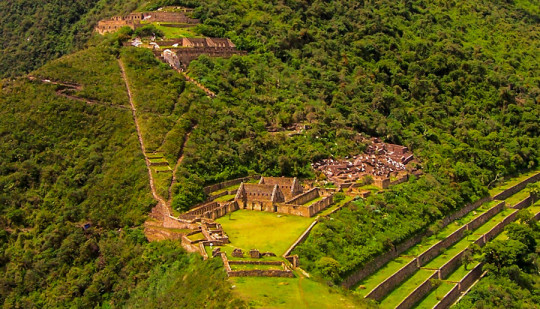
After our early breakfast we will visit the mysterious Inca site of Choquequirao, where our professional Tour Guide will explain about the history of this magnificent Inca site. Originally discovered in the 17th century by the Spanish, it lay abandoned and forgotten until recent years when tourism raised the profile of the city and exploration began. Even with this increased interest only 25% of the city has been explored and many of its secrets still wait to be discovered. Actually we can visit the most important zones such as the main plaza, the inca houses, the granaries, the ceremonial sector and its altars, the famous terraces, and the great Llama sector where Incas represented this sacred animal on their buildings. After our guiding visit, you have extra time to explore and enjoy the place by yourselves, after this, we continue with our trail, we will begin walking uphill until the highest point for this day called Choquequirao pass located at 3,300 masl. or 10,890 ft., then we will descend until to the deepest point of the small canyon known as White River or Río Blanco (1900m/6234f), On the way we will pass by Pinchiunuyoj, a small archaeological site. From Rio Blanco we will climb up for about 3 hrs. and during this time we will observe different species of birds, different varieties of orquids, and local coca plantations, we continue hiking until our campsite at the place called maizal (3000 masl. / 9900 ft.).
DAY 4: MAIZAL – SAN JUAN PASS – YANAMA
Today after a very good breakfast we will start a superb day’s hike on a path surrounded by vegetation and flowers climbing by 3 ½ hours along the way you will see evidence of mines that at one time were exploited, but are no longer used. As we continue and ascend, the weather will become a little colder and we will find the remains of an Inca trail. This trail will take us toward the pass called San Juan Pass (4200m/13,780ft). From this beautiful place you can see a great landscape with a grand chain of mountains such us Sacsarayoc, Pumasillo and Choquetecarpo, from which some of the latter peak more than 5000m/16404 feet. You will also see glaciers and many mountains that surround it. After some pictures and a break at the San Juan Pass, we’ll head down and in the distance another recently discovered Inca ruin, Corihuayrachina and the equally interesting old silver mines of Mina Victoria, and we continue Descending by 3 hours to the north into the River Yanama Valley, we follow a high trail which traverses steep slopes and provides another excellent opportunity to spot condors. We camp beside the river at the little Andean village of yanama (3530 m / 11,581 ft.). In the afternoon once again our cook will prepare a tea time for us and after a delicious dinner.
DAY 5: YANAMA – YANAMA PASS – TOTORA – COLPAPAMPA
After early breakfast, we make our way out of the Yanama valley, as we ascend we return to a more barren environment where only the local grasses and hardiest plants can survive. we will start climbing slowly to the highest point of the whole trek, this pass is known as yanama pass(4670 masl. or 15410 feet), again the view will be amazing from here, we will be surrounded by snowcapped mountains as the Sacsarayoj mountain and the Padreyoj mountain and if we are lucky we will even see a condor flying., After a small stop, from this pass we make our way down in to the valley and back in to warmer climes. About 1hour beyond the pass we arrive to a small community called totora at 3,630 masl. or 11,979 ft. where we will have our lunch. After lunch, during the afternoon, we will enjoy frequently the view of snowcapped mountains such as Salkantay (6264 m.) and Pintuyu (5450 m.) and we continue going down for another 2 hours to colpapampa (2750 m.) which is where we’ll be camping for the night; when we arrive you’ll notice a change – now that we’re nearly to Machu Picchu the communities are larger and more well supplied, there are also more tourists whom came from the route of the Salkantay trek and they converge at this point.
DAY 6: COLPAPAMPA – PLAYA SAHUAYACU
Our destination today is the village of La Playa about 12km down the valley from Colpapampa. Our route takes us along the Lluskamayo River through an area that is teeming with life and that has various coffee and fruit plantations. Tonight we will stay at the village of La Playa (2400m / 7874ft.) which is well connected and there are plenty of places where you can buy snacks and refreshments, you can also try some of the locally grown coffee. If you are interested there is the option to visit some hot springs that are close by, let your guide know in advance so that he can organise this for you.
DAY 7: LA PLAYA – HYDROELECTRIC STATION – AGUAS CALIENTES TOWN
Today is your last hiking day. It will end around lunch time. This climb along the Inca Trail takes about six hours. It is three hours uphill, along the hillside with great views of the Santa Teresa Valley and some coffee and passion fruit farms. Once we arrive at the top of this mountain, we will be at the famous Inca site of Llactapata, which was built by the Incas. They used it to observe the sunrise during the winter solstice. You will also see Machu Picchu for the first time from this location, as well as views of the surrounding areas, such as, the valleys and mountains of Machu Picchu (Huayna Picchu and Machu Picchu Mountains). Then, we will walk the last three hours, descending down to the hydroelectric station. Here, we will enjoy our last lunch and say goodbye to your trekking chef. You will retrieve your duffel bags and catch the train around 3:30 p.m. After a one hour ride to Aguas Calientes, you will be taken to your hotel for a hot shower. If you would like, you can visit the famous hot springs at Aguas Calientes (the entrance fee is $3 per person), then enjoy dinner at a restaurant.
DAY 8: AGUAS CALIENTES - MACHU PICCHU - CUSCO
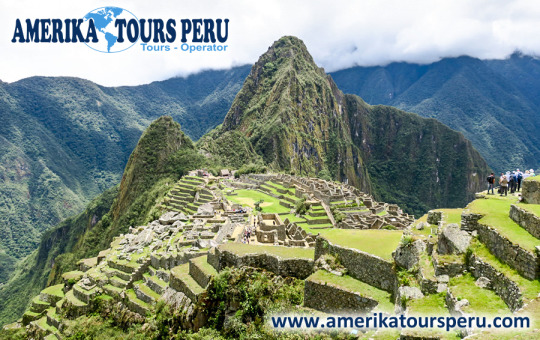
This day will be for sure the most fascinating for you, because you will see Machupicchu in all its glory from dawn. We get up at 5:00 am and after our breakfast we will go to the bus station for boarding the first bus that leaving at 5:30 am to be in Machupicchu at 6:00 am. Inside Machupicchu we will have 2 hours guided tour where you will visit the most remarkable places such as: el torreón semicircular, el templo de las tres ventanas, el intihuatana, el templo del cóndor, la sala de los morteros y el baño del inca. Then you will have free time to explore Machupicchu by your own or descend to Aguas calientes (Lunch in not included). In the afternoon you will board the train from Aguas calientes to Ollantaytambo, place from where you will be transported by touristic bus to Cusco. Estimated arrival to Cusco (20:00 pm).
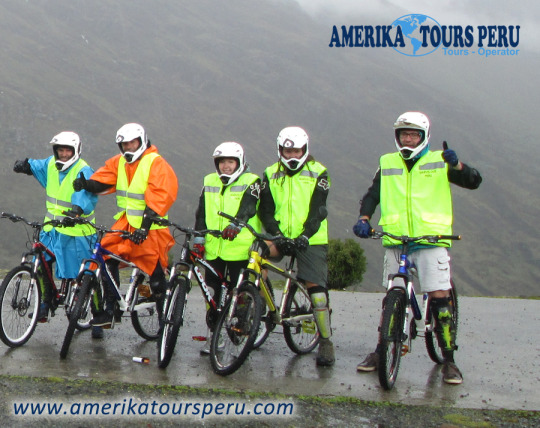
Enjoy a half-day mountain bike tour on Abra Malaga in the Sacred Valley of Peru. This trip is a stunner. During the 5,000 feet of all-downhill biking, you will likely see herds of llamas, the massive glacier of Veronica, waterfalls, and authentic Andean lifestyles of simple stone huts and potato farms. This is the continental divide of South America, since, from here going eastward it drops nearly 20,000 feet down to the Amazon jungle basin, and the views here are outstanding. This section of highway has been described by many as one of the most beautiful in South America. By far one of the most popular mountain bike trips in the area, and with very good reason – it is over 5,000 feet of pure descent on a beautifully paved road.
Your tour starts in Ollantaytambo from where you'll drive one hour up the road to the pass of Abra Malaga, which lies at nearly 14,500 above sea level and at the foot of the massive glacier of Veronica (17,500 feet). From there, you begin a 50 kilometer descent that is one of the longest possible in the world, through gorgeous terrain. This ride is all downhill on a smooth paved road, and is truly suitable for anyone who can ride a bicycle. We have done this trip for nearly ten years and have successfully completed it hundreds of times.This ride fun. Everyone who does it loves it, due to the culture and scenery. It is a great mountain bike ride, perfect for those who love mountain biking. For those with extensive off road experience, there is a international DH course just meters away from the main road (extra cost and logistics are involved, ask for details).
LARES TREK
The Lares Trek is an off-the-beaten trail that begins near the town of Lares, 40 miles north of Cusco and 35 miles south east of Machu Picchu (see map below). The trek itself lies in the Lares Valley, east of the Urubamba mountain range, which traverses part of the Sacred Valley.
The trek can be completed as a standalone 2 or 3 day trail, or be incorporated with a visit to Machu Picchu - extending the tour by 1 or 2 days. The latter option is fast becoming a popular itinerary for trekkers due to the limits of the Classic Inca Trail to Machu Picchu.
Permits are not required for the Lares Trek. This means that you will arrive in Cusco and depending on the season (not June-August).
Of course you will need to book your train tickets to Aguas Calientes as early as possible during peak season, as well as your entrance tickets to Machu Picchu.
In terms of the current route itinerary, there are in fact a number of variations on the Lares Trek, most end at Ollantaytambo.
From here trekkers can catch a train to Aguas Calientes to visit Machu Picchu or indeed return to Cusco. We discuss each Lares Trek route variation in some detail below.
There are a number of factors that make this trek to great alternative to the Classic Inca Trail.
Firstly, and perhaps most importantly for some, that is a lot quieter than than Inca Trail.
Secondly, the route is arguably easier than the Inca Trail in that one does not need to deal with as many steps.
Altitude is still an issue and on some route you will need to deal with 3 high altitude passes that are over 4,200 meters (the highest, depending on your route is either 4,400 meters or 4,600 meters).
DAY 1: CITY TOUR CUSCO
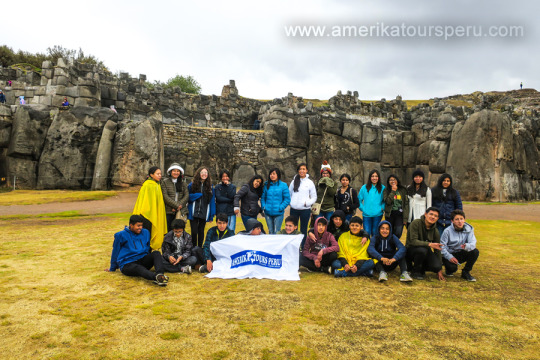
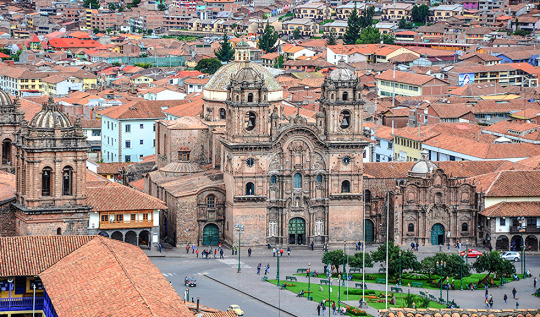
We'll be waiting for you at the airport in Cusco on your arrival date , take you to the hotel where you will rest for an hour , you'll have a cup of coca tea and we will pick you up from your Hotel in the afternoon (from 13:30 hrs to 18:30 hrs) to start with the tour around Cusco and outskirts. Tour around Cusco and outskirts: We pick you up from your Hotel to start visiting the following attractives , with aprofessional guide: - The Koricancha Palace andConvent of Santo Domingo Religious center known as "The Temple of the Sun" where you will admire the impressive engineering used in its construction. The Cathedral:Colonial religious monument of extraordinary artistic value. Sacsayhuaman: Located 3 km from the city of Cusco,impressive stone fortress monumental and magnificent architecture, famous for its enormous carved stones,some of which are at9 m/ 30 feettall and weigh of 350 tons. Here is where the Inty Raymi or Fiesta del Sol in June take place every year. Qenqo: Ceremonial and ritual center, amphitheater where sacrifices were made. Puca-Pucara: An old tambo (resting place), monitoring placethroughout the Inka Empire Routes. Tambomachay: At 7 Km. From the city of Cusco,ceremonial center of worship of water , traditionally known as the place of water.Excursiontime: around 5 hours. Frequency : everyday in the afternoons.
DAY 2: CUSCO - SACRED VALLEY OF THE INCAS
This day we take a trip to the Sacred Valley of the Incas: visit the Pisac Incas built, the colorful Andean market and the church. Then we pass places like Lamay and Calca on the way to arrive in Urubamba town where we stop for lunch. After lunch visit to Ollantaytambo town, where we can see its typical streets, the impressive archaeological constructions and agricultural terracing, not to mention the splendid views over the sacred valley. Finally, visit the picturesque Andean village of Chinchero where the built of the royal hacienda Of Tupac Inca Yupanqui lie. You can admire the well preserved Inca wall in the main square, and visit the beautiful colonial temple. Built on Inca foundations with interesting paintings. Overnight in Cusco
DAY 3: CUSCO - MACHUPICCHU
Pick up at the hotel to take the train for a full day tour of the Magical citadel of Machu Picchu, it is 112 Km. from Cusco .During the journey we see the Urubamba canyon, Urubamba River and the show capped peaks of the Veronica Mountain. Arriving in Aguas Calientes we go to Machu Picchu where we visit this wonderful Inca Sanctuary also known as “The lost City of the Incas “one of the best known examples of surviving Inca. After the visit, we come back to Aguas Calientes to take the train back to Cusco.
DAY 4: DEPARTURE FROM CUSCO
We will pick you up from your hotel in Cusco and take you to the airport.
MACHU PICCHU TOUR IN CUSCO ITINERARY
If you want to learn more about Cusco, Sacred Valley, Maras-Moray and Machu Picchu, this package will let you learn about the great history of the Incas, and see many attractions from Inca times and of the Colony. This package is recommended for people of all ages.
DAY 1: CITY TOUR CUSCO
We'll be waiting for you at the airport in Cusco on your arrival date , take you to the hotel where you will rest for an hour , you'll have a cup of coca tea and we will pick you up from your Hotel in the afternoon (from 13:30 hrs to 18:30 hrs) to start with the tour around Cusco and outskirts. Tour around Cusco and outskirts: We pick you up from your Hotel to start visiting the following attractives , with aprofessional guide: - The Koricancha Palace andConvent of Santo Domingo Religious center known as "The Temple of the Sun" where you will admire the impressive engineering used in its construction. The Cathedral:Colonial religious monument of extraordinary artistic value. Sacsayhuaman: Located 3 km from the city of Cusco,impressive stone fortress monumental and magnificent architecture, famous for its enormous carved stones,some of which are at9 m/ 30 feettall and weigh of 350 tons. Here is where the Inty Raymi or Fiesta del Sol in June take place every year. Qenqo: Ceremonial and ritual center, amphitheater where sacrifices were made. Puca-Pucara: An old tambo (resting place), monitoring placethroughout the Inka Empire Routes. Tambomachay: At 7 Km. From the city of Cusco,ceremonial center of worship of water , traditionally known as the place of water.Excursiontime: around 5 hours. Frequency : everyday in the afternoons.
DAY 2: CUSCO - SACRED VALLEY OF THE INCAS
This day we take a trip to the Sacred Valley of the Incas: visit the Pisac Incas built, the colorful Andean market and the church. Then we pass places like Lamay and Calca on the way to arrive in Urubamba town where we stop for lunch. After lunch visit to Ollantaytambo town, where we can see its typical streets, the impressive archaeological constructions and agricultural terracing, not to mention the splendid views over the sacred valley. Finally, visit the picturesque Andean village of Chinchero where the built of the royal hacienda Of Tupac Inca Yupanqui lie. You can admire the well preserved Inca wall in the main square, and visit the beautiful colonial temple. Built on Inca foundations with interesting paintings. Overnight in Cusco
DAY 3: CUSCO - MACHUPICCHU
Pick up at the hotel to take the train for a full day tour of the Magical citadel of Machu Picchu, it is 112 Km. from Cusco .During the journey we see the Urubamba canyon, Urubamba River and the show capped peaks of the Veronica Mountain. Arriving in Aguas Calientes we go to Machu Picchu where we visit this wonderful Inca Sanctuary also known as “The lost City of the Incas “one of the best known examples of surviving Inca. After the visit, we come back to Aguas Calientes to take the train back to Cusco.
DAY 4: MARAS MORAY TOUR
We will start at 9:00 am with pick up from your hotel; we will go to the Quechua village of Chinchero where we will make a stop. This town is located 28 km outside of Cusco and is surrounded by patchwork style fields with exquisite natural colours. Chinchero is a charming town, with colonial style buildings and was a major agricultural center during the Tawantinsuyo. Here you can appreciate the stone walls with trapezoidal niches and a traditional market where locals still practice bartering. The women of Chinchero are easily recognized for their very distinguishing clothing and braided hair. We will go on to the picturesque town of Maras, 52 km from Cusco. It is located at an altitude of 3,380 meters above sea level. This is a small village famous for its salt mines which consist of about 3000 small wells with an average area of about 5m² from which salt is extracted after a drying process. The Salt mines, better known as “Salineras de Maras”, have been exploited since Inca times as a means of economic exchange. 7 km from Maras, we will visit the archaeological site of Moray. Here we will see the greatness of the circular terraces of Inca agriculture. Moray is a group of circular terraces which was used as an agricultural experimental center. The Incas used it to study the adaptation of plants to new ecosystems. The overlapping circular stone rings widen as they rise and it has a total depth of 150 m. After a guided tour, we will go back to Cusco. The tour lasts about 5 hours and ends at Regocijo Square (a half away block from the main square) at around 2:30 pm. Transfer to your hotel
DAY 5: DEPARTURE FROM CUSCO
We will pick you up from your hotel in Cusco and take you to the airport.
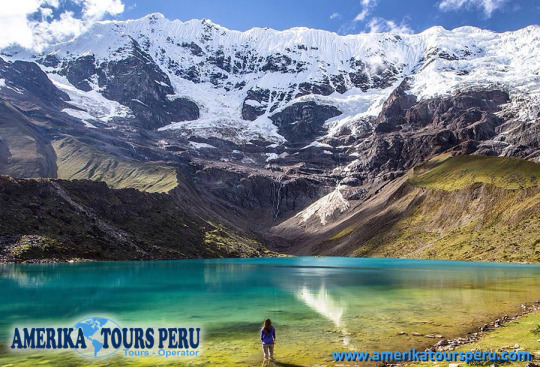
Our adventure begins around 5:00 am with the pick up at your hotel. On a touristic van we will head to the Mollepata village in Apurimac river valley. Breakfast will be with the tour group and afterwards there’s a hike towards Soraypampa (3.900 m), a large green plain where we will have a stop. From here, we hike towards our final destination. After an hour and a half of walking along the magnificent Cusco geography, we will arrive to the wonderful spot: the high snowy mountains standing around the incredible beauty of the Humantay Lagoon. Don’t waste this chance to appreciate the view and take all the pictures you can of this wonder of nature at 4.200 meters above sea level. After this incredible experience, we go back to the campsite for lunch. Around 6:30 pm we return to Cusco city, leaving the group downtown.
DAY 1: CUSCO – PATABAMBA – HUCHUY QOSQO
We will begin the tour with an early morning pick up from your hotel, at 7:30 am, to drive right over to Patabamba (3800 m.). The day’s hike will start at this point, and will continue through Andean landscapes and over the Pukamarca Pass at 3,800m, we will hike along a path that leads to the Tauca town, where we encounter archaeological remains and wild crops, such as tarwi, and a large quantity of cactus. We continue on to the Pukamarca pass at 4200, where we may enjoy views of the Surrounding area, immense mountains, Veronica, Pitusiray, Chicon and San Juan snow peaks. Continuing the path, we will descend towards the beautiful, remote Andean pueblo, Pukamarca at 4010m, where we stop and have a short break. As get back on the move, we will walk downhill into a mystical ancient path which will lead us to the Leon Punku Ravine. We will be led into a very narrow corridor, between some immense rock walls, where we will discover some Incan remains and various Inca bridges and sets of stairs (some of the best Inca Stairs anywhere). This canyon is absolutely magical and boasts geological formations surrounded by majestic rocks and boulders that direct the river to Huchuy Qosqo at 3600m, where we will soon be arriving. Upon our arrival to the ruins in the evening, we will actually continue on past the ruins and to our accommodations for the night. We will have dinner and sleep in the typical homestay of a native of the area, just to the side of the Huchuy Qosqo ruins.
DAY 2: HUCHUY QOSQO- LAMAY-OLLANTAYTAMBO- AGUAS CALIENTES
Huchuy Qosqo is an Inca archaeological complex which is perched precariously on the side of a mountain with imposing architecture that includes a large open ceremonial center, from which we enjoy an amazing panoramic view of the Sacred Valley, the Vilcanota River, and the snow capped mountain range of the same name. While in the complex, we will receive a guided tour as we make our way around the ruins after which we continue our way down the mountain, to Lamay at 3000 m/ 9840 ft. Lamay is a town dedicated to agriculture and cattle raising. Later in the afternoon, our private transport drives us to Ollantaytambo, where we will board an afternoon train to Aguas Calientes. The train ride to get there is an absolutely gorgeous route, renowned the world round for its’ beauty. Upon our arrival to Aguas Calientes all passengers will be shown their respective hotels.
DAY 3: AGUAS CALIENTES - MACHU PICCHU - CUSCO
This day will be for sure the most fascinating for you, because you will see Machupicchu in all its glory from dawn. We get up at 5:00 am and after our breakfast we will go to the bus station for boarding the first bus that leaving at 5:30 am to be in Machupicchu at 6:00 am. Inside Machupicchu we will have 2 hours guided tour where you will visit the most remarkable places such as: el torreón semicircular, el templo de las tres ventanas, el intihuatana, el templo del cóndor, la sala de los morteros y el baño del inca. Then you will have free time to explore Machupicchu by your own or descend to Aguas calientes (Lunch in not included). In the afternoon you will board the train from Aguas calientes to Ollantaytambo, place from where you will be transported by touristic bus to Cusco. Estimated arrival to Cusco (20:00 pm).
DAY 1: CUSCO – CACHORA – CHIQUISCA
We will pick you up from your Cusco hotel at 5.00 am in our transport, and then drive for 2 hours to Curahuasi (2909 m. / 9543 ft.), village where we will have breakfast, and then we continue to Capuliyoc, we arrive to nice view point called Capuliyoc (2915 m. / 9561 ft.), from here, we will have the privilege to see spectacular views of Padriyoc and Wayna Cachora snowcapped peaks (mountains over 5400 m.). At this point we will have some time to enjoy our snacks and we take some pictures of the breathtaking views of the river and the canyon stretching down the valley. From here we will descend through a unique zigzag path for 2 hours more to reach our place for lunch. Finally around 1 pm. we will have lunch. You have time to relax, put your feet up and have some refreshing tea, before we get ready to hike again for 2 hours more descending, so, we will reach our campsite located at Chiquisca (1836 m. / 6023 ft.) around 5 pm. where we will spend the night.
DAY 2: CHIQUISCA – MARAMPATA – CHOQUEQUIRAO RUINS
After our breakfast, we will leave early, throughout the day we will see a wide variety of bromeliads, orchids and stands of bamboo; we’ll also hope see birds such as Andean Quetzals, Toucans an a variety of hummingbirds. From our campsite we walk around 1 hour in order to descend to the bottom of the Canyon, called Playa rosalina and the magnificent Apurimac river (1550 m./ 5084 ft). From here we will begin probably the hardest section of the path due to the ascension; 2 hours steep climb to Santa rosa (2095 m. / 6873 ft.) where We will have time to take a refreshing break. From Santa rosa we will continue uphill for another 2 hours towards marampata (2913m / 9557ft), a flat ground where we can have a break and enjoy the views of Apurimac Canyon and the famous Inca site of Choquequirao. Here We’ll have lunch and take advantage of the facilities (toilets and wash room).After lunch We will continue to hike for another one hour to reach our campsite which is located just outside of the Great Inca Site Choquequirao (3110 m. / 10120 ft.) and We will spend the late evening in the ruins, where we will see a very nice sunset over mountains, and if we may be lucky enough to spot Condors soaring nearby over the valley below. Camping at Choquequirao campsite (bathrooms and cold water showers are available).
DAY 3: CHOQUEQUIRAO RUINS – CHOQUEQUIRAO PASS – MAIZAL
After our early breakfast we will visit the mysterious Inca site of Choquequirao, where our professional Tour Guide will explain about the history of this magnificent Inca site. Originally discovered in the 17th century by the Spanish, it lay abandoned and forgotten until recent years when tourism raised the profile of the city and exploration began. Even with this increased interest only 25% of the city has been explored and many of its secrets still wait to be discovered. Actually we can visit the most important zones such as the main plaza, the inca houses, the granaries, the ceremonial sector and its altars, the famous terraces, and the great Llama sector where Incas represented this sacred animal on their buildings. After our guiding visit, you have extra time to explore and enjoy the place by yourselves, after this, we continue with our trail, we will begin walking uphill until the highest point for this day called Choquequirao pass located at 3,300 masl. or 10,890 ft., then we will descend until to the deepest point of the small canyon known as White River or Río Blanco (1900m/6234f), On the way we will pass by Pinchiunuyoj, a small archaeological site. From Rio Blanco we will climb up for about 3 hrs. and during this time we will observe different species of birds, different varieties of orquids, and local coca plantations, we continue hiking until our campsite at the place called maizal (3000 masl. / 9900 ft.).
DAY 4: MAIZAL – SAN JUAN PASS – YANAMA
Today after a very good breakfast we will start a superb day’s hike on a path surrounded by vegetation and flowers climbing by 3 ½ hours along the way you will see evidence of mines that at one time were exploited, but are no longer used. As we continue and ascend, the weather will become a little colder and we will find the remains of an Inca trail. This trail will take us toward the pass called San Juan Pass (4200m/13,780ft). From this beautiful place you can see a great landscape with a grand chain of mountains such us Sacsarayoc, Pumasillo and Choquetecarpo, from which some of the latter peak more than 5000m/16404 feet. You will also see glaciers and many mountains that surround it. After some pictures and a break at the San Juan Pass, we’ll head down and in the distance another recently discovered Inca ruin, Corihuayrachina and the equally interesting old silver mines of Mina Victoria, and we continue Descending by 3 hours to the north into the River Yanama Valley, we follow a high trail which traverses steep slopes and provides another excellent opportunity to spot condors. We camp beside the river at the little Andean village of yanama (3530 m / 11,581 ft.). In the afternoon once again our cook will prepare a tea time for us and after a delicious dinner.
DAY 5: YANAMA – YANAMA PASS – TOTORA – COLPAPAMPA
After early breakfast, we make our way out of the Yanama valley, as we ascend we return to a more barren environment where only the local grasses and hardiest plants can survive. we will start climbing slowly to the highest point of the whole trek, this pass is known as yanama pass(4670 masl. or 15410 feet), again the view will be amazing from here, we will be surrounded by snowcapped mountains as the Sacsarayoj mountain and the Padreyoj mountain and if we are lucky we will even see a condor flying., After a small stop, from this pass we make our way down in to the valley and back in to warmer climes. About 1hour beyond the pass we arrive to a small community called totora at 3,630 masl. or 11,979 ft. where we will have our lunch. After lunch, during the afternoon, we will enjoy frequently the view of snowcapped mountains such as Salkantay (6264 m.) and Pintuyu (5450 m.) and we continue going down for another 2 hours to colpapampa (2750 m.) which is where we’ll be camping for the night; when we arrive you’ll notice a change – now that we’re nearly to Machu Picchu the communities are larger and more well supplied, there are also more tourists whom came from the route of the Salkantay trek and they converge at this point.
DAY 6: COLPAPAMPA – PLAYA SAHUAYACU
Our destination today is the village of La Playa about 12km down the valley from Colpapampa. Our route takes us along the Lluskamayo River through an area that is teeming with life and that has various coffee and fruit plantations. Tonight we will stay at the village of La Playa (2400m / 7874ft.) which is well connected and there are plenty of places where you can buy snacks and refreshments, you can also try some of the locally grown coffee. If you are interested there is the option to visit some hot springs that are close by, let your guide know in advance so that he can organise this for you.
DAY 7: LA PLAYA – HYDROELECTRIC STATION – AGUAS CALIENTES TOWN
Today is your last hiking day. It will end around lunch time. This climb along the Inca Trail takes about six hours. It is three hours uphill, along the hillside with great views of the Santa Teresa Valley and some coffee and passion fruit farms. Once we arrive at the top of this mountain, we will be at the famous Inca site of Llactapata, which was built by the Incas. They used it to observe the sunrise during the winter solstice. You will also see Machu Picchu for the first time from this location, as well as views of the surrounding areas, such as, the valleys and mountains of Machu Picchu (Huayna Picchu and Machu Picchu Mountains). Then, we will walk the last three hours, descending down to the hydroelectric station. Here, we will enjoy our last lunch and say goodbye to your trekking chef. You will retrieve your duffel bags and catch the train around 3:30 p.m. After a one hour ride to Aguas Calientes, you will be taken to your hotel for a hot shower. If you would like, you can visit the famous hot springs at Aguas Calientes (the entrance fee is $3 per person), then enjoy dinner at a restaurant.
DAY 7: AGUAS CALIENTES - MACHU PICCHU - CUSCO
This day will be for sure the most fascinating for you, because you will see Machupicchu in all its glory from dawn. We get up at 5:00 am and after our breakfast we will go to the bus station for boarding the first bus that leaving at 5:30 am to be in Machupicchu at 6:00 am. Inside Machupicchu we will have 2 hours guided tour where you will visit the most remarkable places such as: el torreón semicircular, el templo de las tres ventanas, el intihuatana, el templo del cóndor, la sala de los morteros y el baño del inca. Then you will have free time to explore Machupicchu by your own or descend to Aguas calientes (Lunch in not included). In the afternoon you will board the train from Aguas calientes to Ollantaytambo, place from where you will be transported by touristic bus to Cusco.
Estimated arrival to Cusco (20:00 pm).
DAY 1: CUSCO-ABRA MALAGA-SANTA MARÍA
The first day starts early in the morning; we will pick you up from your hotel between 6:30 to 7:00 am. For two hours we cross through the Sacred Valley of the Incas. A very famous Valley due it is the leading producer of vegetables in the Cusco region, besides to host imposing Inca palaces and buildings. During the route we stop for 30 minutes in Ollantaytambo village, where we have breakfast and buy some candies, chocolates, cookies, and energizantes, we will continue driving for 1 more hour until arriving to Abra Malaga pass , located at 4350 m.a.s.l.From where we will descend with bicycles for around 3 hours observing small towns, fruit plantations, rivers and creeks until arriving to the town of Huamanmarca, where we catch again the car that will transport us for 30 more minutes to Santa Maria town, where we will have lunch and will keep our personal stuff in our respective rooms, because here we will spend the night. In the afternoon at 15:00 pm you can go to do river rafting (not included/optional). 2 hours of full adrenaline and fun into the Urubamba river of lll and IV level. After finishing rafting we will come back to Santa Maria where we have dinner and spend the night.
DAY 2: SANTA MARÍA-QELLOMAYO-SANTA TERESA.
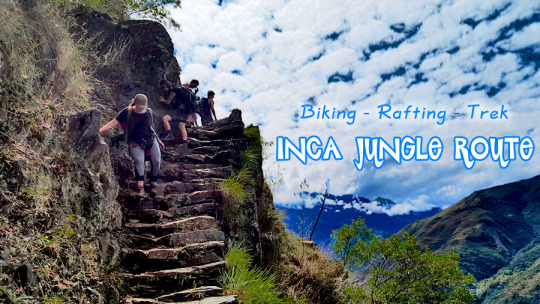
We will wake up at 6:00 am and after our breakfast we will start hiking, this day will be the longest but also very interesting, we will cross through widespread crops of oranges, coffee, cacao, coca, soursop, pineapple, etc.Besides observing in the route animals of the high jungle with which you will have the opportunity to interact.The 2 first hours you will hiking on a flat surface, then you will uphill 2 hours until the summit, from where you will have an amazing view of the Quillabamba valley and also from where we will descend on original Inca Trail until arriving Qellomayo town, where we will have lunch and resting time.Then we will continue hiking 2 more hours next to river bank until arriving to la Oroya , The Oroya is a basquet with wires that we will use to cross the river and to get into to the Cocalmayo thermal baths , where we will be 2 hours. After it we will go by car for 30 minutes to Santa Teresa town where we have dinner and we spend the night.
DAY 1: SANTA TERESA-HIDROELÉCTRICA-AGUAS CALIENTES.
We wake up at 8:00 am and after breakfast we will go to zip lining (not included/optional).After zip lining we will catch the car that will transport us to the town of Hidroelectrica, where we have lunch and resting time, in the afternoon we will continue hiking for 3 more hours next to the train railway, where we will observe beautiful landscapes until arriving to Aguas Calientes town where we will spend the night. Hiking distance: 14 Km / 8.75 miles (3-4 horas). Altitude of the third stay: 2000 metros sobre el nivel del mar. (casa familiar).
DAY 4: AGUAS CALIENTES- MACHUPICCHU-CUSCO.
This day will be for sure the most fascinating for you, because you will see Machupicchu in all its glory from dawn. We get up at 5:00 am and after our breakfast we will go to the bus station for boarding the first bus that leaving at 5:30 am to be in Machupicchu at 6:00 am. Inside Machupicchu we will have 2 hours guided tour where you will visit the most remarkable places such as: el torreón semicircular, el templo de las tres ventanas, el intihuatana, el templo del cóndor, la sala de los morteros y el baño del inca. Then you will have free time to explore Machupicchu by your own or descend to Aguas calientes (Lunch in not included). In the afternoon you will board the train from Aguas calientes to Ollantaytambo, place from where you will be transported by touristic bus to Cusco. Estimated arrival to Cusco (20:00 pm).
DAY 1: CUSCO - CALCA - LARES THERMAL BATHS - WACAWASI
We will leave Cusco at 6.00 am for the drive to Calca, a town in the Sacred Valley of the Incas. This is an excellent time of day to enjoy the fine scenery visible on all sides of the road. On the way there will be time to visit the Inca granaries of Muyoq Orqo, after which we will continue along the valley road, passing Mount Sawasiray before beginning our ascent to Lares at the pass known in Quechua as Willka Punku (“Sacred Gateway”). We will have plenty of time to rest and enjoy the Lares thermal baths. After lunch we will begin our walk to the first campsite at the village of Wacawasi, where we will visit local weaving families and have our evening meal.
DAY 2: WACAWASI - IPSAYQOCHA
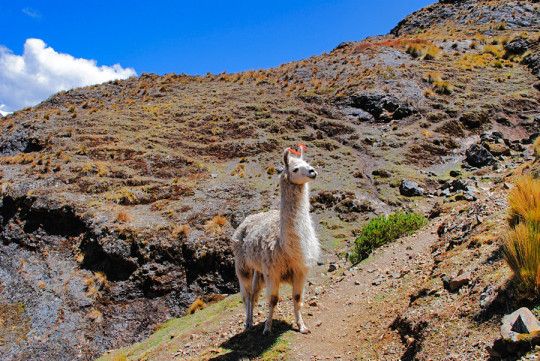
We will continue our trek after breakfast, climbing steadily through the natural highland habitat of llamas and alpacas. This is a good area for bird watching, or for simply taking in the panoramic views of the surrounding peaks. We will arrive at our second campsite in the afternoon, at an isolated picturesque location far from all human settlements.
DAY 3: IPSAYQOCHA - OLLANTAYTAMBO - AGUAS CALIENTES
Today we will reach the high pass at Ipsayqocha (14,271 ft / 4350 m), in a landscape populated by herds of llamas and alpacas. Once over the pass, a long descent takes the walker to the indigenous community of Patacancha, where our vehicle will be waiting to take us to Ollantaytambo, a village originally established by the Incas. We will have plenty of time to visit the archaeological site before our transfer to the train station for the ride to the village of Aguas Calientes, below the ruins of Machu Picchu, where we will spend the night at the hotel of your choice (hotel not included).
DAY 4: FULL DAY AT MACHU PICCHU
We will get up early today and take one of the first shuttle buses up to the ruins of Machu Picchu, a ride of approximately 25 minutes. After the guided tour of Machu Picchu, you will have plenty of free time to climb the mountain known as Huayna Picchu (subject to availability). Some sections of this route require ropes and only those travelers who do not suffer from vertigo should attempt it. It is a one-hour trip to the summit and is not recommended during rainfall.
DAY 01 : CUSCO - MOLLEPATA - SAYAPATA – HUMANTAY LAKE - SORAYPAMPA (L)(D)
We will leave Cusco approximately at 5:00a.m. A bus will take us to the town of Mollepata (2900 meters above sea level) where we will arrive approximately at 7:30 in the morning, we will stop for last minute supplies, leg-stretching or to use the restrooms at a local restaurant. We will continue our journey to Sayapata, our trek starting point. We will meet with our support staff, who will load the equipment on horses and mules. Around 9:00 a.m., we will begin our hike toward Soraypampa (3850 meters above sea level). During the hike we will have panoramic views of the majestic Salkantay, other mountains covered with snow, and the Valley of Apurimac River. Around 1:00p.m., we will have a Peruvian lunch. After lunch, we will visit Humantay Lake, a marvelous lake in the mountains, (3 hours hike) and we will come back to our campsite where the tents will be ready for you as well as your dinner.
DAY 02 : SORAYPAMPA - CHALLWAY (B)(L)(D)
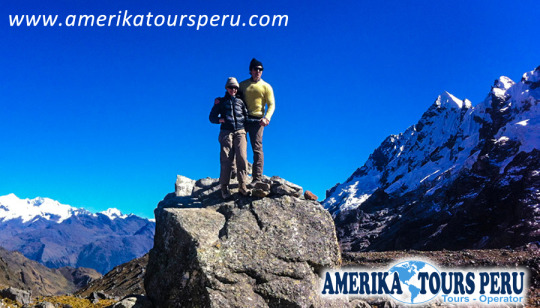
Today, nature will change drastically from dry sceneries to snowy peaks and tropical areas. After a nutritious breakfast, we will start the most difficult part of the trek. We will start the hike around 7:00 in the morning. We will hike to a place called Pampas Salkantay, then go toward the left side of the snowy peaks of Umantay located next to the Apu Salkantay. At midday, we will be on the highest point (4600 meters above sea level).salkantay route tour to machu picchuWe will appreciate spectacular views of the mountains and the imposing snowy peaks of the Salkantay (6264 meters above sea level) which is known as the second highest point of the Cusco region. Around 1:00 p.m., we will have our lunch, in the area called Huayracmachay. After a trek of approximately 3 hours, we will arrive to our camp in Challway (2920 meters above sea level). Around 7:00p.m., we will recuperate from the trek and eat dinner.
DAY 03 : CHALLWAY – PLAYA SAHUAYACO – SANTA TERESA HOT SPRINGS (B)(L)(D)
Around 7:00a.m., we will start our trek. We will walk for about 6 hours toward Playa Sahuayaco and during this period; we will observe a town called Collpabamba, also called the “Forest Cloudy Brow” where waterfalls, fruit-bearing trees, varied flora, and birds can be observed. If we are lucky, we will be able to observe the famous bird called the “Cock of the Rocks”. Here we will have lunch. At 2:00 p.m. a local bus will take us to Santa Teresa Hot Springs, where you will enjoy and relax at the hot pools. You will have dinner and camping there.
DAY 04 : SANTA TERESA- LLACTAPATA – HYDROELECTRIC - AGUAS CALIENTES (B)(L)(D)
After an early breakfast, we will take a local transportation to Lucmabamba (40 minutes ride) to our start hiking point. Once at the Llactapata entrance, you will start an ascent hike towards the ruins of Llactapata. On the way you will observe coffee plantations, beautiful landscapes as well as diverse flora and fauna. After three hours, you will arrive at Llactapata where you will have an amazing view of Machu Picchu. Here you will have time to rest and enjoy the scenery. A descending trail will take you to the Hydroelectric where you will eat lunch at a local restaurant. The last park of the trek, an approximately 2 hours walk, takes us to Aguas Calientes. Upon arrival, you will be accommodated at the hostel or hotel of your choice (included on this package). You will enjoy dinner at a local restaurant at about 7:00p.m.
DAY 05: AGUAS CALIENTES - MACHU PICCHU - CUSCO (B)
Today, you will start early at around 4:30a.m. and walk up to Machu Picchu. In Machu Picchu, you will have a guided tour for about two hours and after that you will be free to explore the Citadel and take pictures, if you desire, walk up to the Sun Gate or ascent toward the Huaynapicchu Mountain. At 6:45p.m. (depending on availability), you will be taking a train to Ollantaytambo and from there; a bus will drive you to Cusco.