This is default featured slide 1 title

Go to Blogger edit html and find these sentences.Now replace these sentences with your own descriptions.

This is default featured slide 2 title

Go to Blogger edit html and find these sentences.Now replace these sentences with your own descriptions.

This is default featured slide 3 title

Go to Blogger edit html and find these sentences.Now replace these sentences with your own descriptions.

This is default featured slide 4 title

Go to Blogger edit html and find these sentences.Now replace these sentences with your own descriptions.

This is default featured slide 5 title

Go to Blogger edit html and find these sentences.Now replace these sentences with your own descriptions.

Mostrando entradas con la etiqueta queshuachaca. Mostrar todas las entradas

martes, 7 de abril de 2020

What to see in Qeswachaka Bridge?

Q´eswachaca Bridge

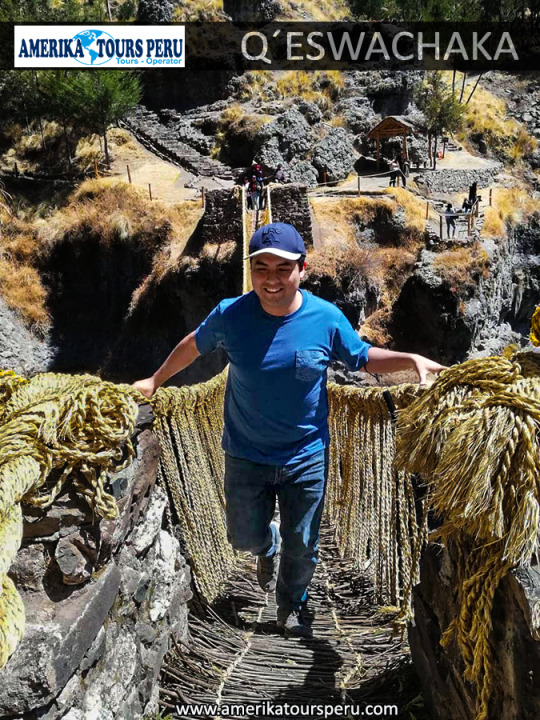
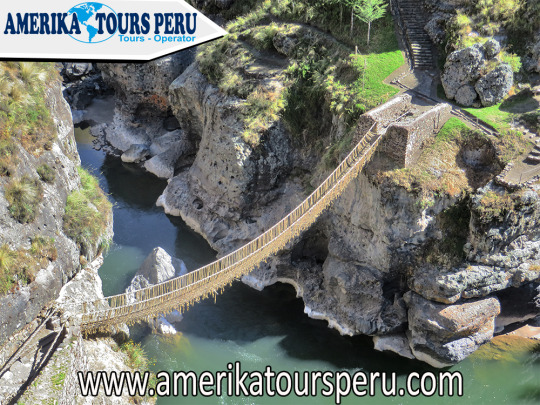
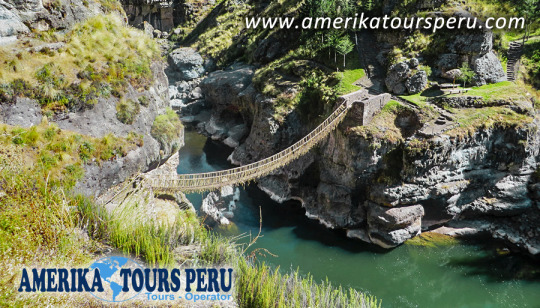
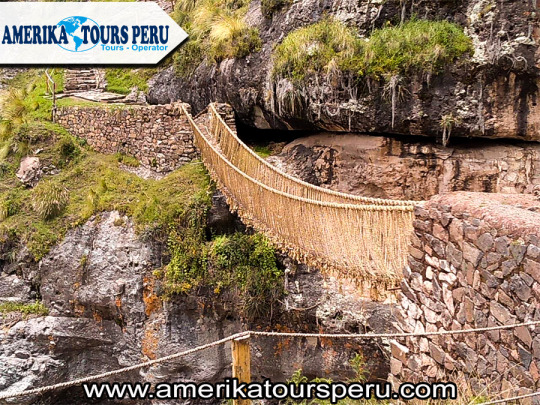
One of the most precious gifts that the Inca has given us is this suspension bridge that lies over the Apurímac River. Made from straw brava or ichu icho, this wonder is renewed year after year through a rite performed by the communities of Winch'iri, Chaupibanda, Ccollana Quehue and Perccaro. Therefore, do not miss the opportunity to cross its 28 meters long which will make you experience adrenaline to the fullest in this beautiful Inca construction.
QUESHUACHACA TOUR INFORMATION:


Four Lagoons

The circuit of the four lagoons is located in the province of Acomayo, 107 km from the city of Cusco. It is made up of Pomacanchi, Acopia, Asnaqocha and Pampamarca. Among its attractions are the abundance of natural grass and fish.

Small volcano in Pabellones, Yanaoca

This small volcano, approximately 4 meters in diameter, is located in the pavilion area of ​​the Tungasuca district, which attracts attention to visitors and locals due to its unique size as it is considered the smallest in the world.
A tradition that for the peasant communities of Huinchiri, Chaupibanda, Choccayhua and Qollana Quehue has subsisted for more than five centuries thanks to the intercession of the divinity. "If we do not build a new bridge every year, we risk provoking the wrath of the Pachamama (Mother Earth in Quechua) and the Apus (tutelary forces of nature)", "Whether we use it or not, we are exposed to natural catastrophes that they can ruin our crops of potatoes, beans, wheat or barley, and even misfortunes such as illness or death, ”says María Quispe, a 60-year-old woman who has participated in such a mission since childhood.
Before making the weaving of the bridge, a payment is made to the land, where the Paqo or Priest, makes a cloth altar with indigenous motifs in which he deposits coca leaves, llama fetuses and food that are offered to the Pachamama, since, like any human being, they are hungry and it is the obligation of their "children" (inhabitants) to satisfy them. The Paqo says that before the renovation of the bridge, the Apus indicate to him each year what his appetite is, since his tastes evolve and we should not always pay him with the same “delicacy”, to which the Apus are also invited to implore their protection and avoid accidents during renovation.
The women stay away from the work of rebuilding the bridge, a task reserved for men. The inhabitants of the place say that the woman attracts the q’encha, Quechua voice to designate bad luck, which can lead to divine "mishaps" during certain rituals.

sábado, 25 de enero de 2020

Qeswachaca Bridge in Cusco

Queswachaca is a rope bridge made with Inca techniques and knowledge which has been transmitted from generation to generation until today for approximately 600 years. The Queswachaca bridge is over the waters of the Apurimac River and belongs to the Qapaqñan road network.


The Queswachaca suspension bridge is known as the last Inca bridge and is located in the region of Cusco, Canas province and Qhuehue district.
If you want to know more, keep reading that on our website you will find the most complete information about Queswachaca

Why the Queswachaca Inca Bridge is important

The Inca bridge of Queswachaca is important as it maintains the ancestral customs of our Inca ancestors and is the last Inca bridge today, every second Sunday of June the Queswachaca Inca bridge is renewed by carrying out 3 days of celebrations which we will detail more in depth paragraphs below.
The bridge is 28 meters long and 1.20 meters wide, the inhabitants of the communities of Chaupibanda, Huinchiri, Choccayhua and Qollana Qehue and its annexes Ccomayo, Perccaro, Chirupampa among others. They build the bridge following the tradition of the Inca Pachacutec, about 800 community members from the aforementioned communities are responsible for the construction of the bridge.

Process for the construction of the Queswachaca bridge

1st day: The first day begins with the celebration of “apu Quinsallallawi”, this ceremony takes place during the dawn, during the celebration of the gathering or gathering of ichu which is braided by the women of the communities and the Work that is being done is supervised by the “chakaruwak” or tissue specialist.
2nd day: The Inca bridge is dismantled via Queswachaca, thus removing the nails of stones that support the bridge, then put the four ropes that is the main support of the bridge.
3rd day: On the third day the laying and braiding is done with the culmination of the traffic zone (Bridge floors) and the handrails of both left and right sides.
4th: day: After the hard work, the culmination of the Queswachaca bridge is celebrated with food and typical dances.

viernes, 6 de diciembre de 2019

Queshuachaca, the last Inca bridge in Peru

Every first half of June, a bridge disappears to be raised again. It is that of Queshuachaca, in Quehue, the only one in the world made with fibers of the ichu plant, following the most ancestral Inca tradition.


Every time they talk to us about Cuzco, it is usual for our mind to travel to the wonderful Inca city of Macchu Pichu. However, this region of the Peruvian Andes not only stands out, as far as archeology is concerned, for this lost city, considered one of the wonders of Humanity. There are other places that are well worth a visit and, above all, the pleasure of marveling at their beauty.
This is the case of the Queshuachaca bridge, also known as Q’eswachaka. It is not a construction at the time of circumventing the canyon that forms the Apurimac River, in the district of Quehue, one of the main rivers of Peru. On the contrary, it is an attraction, while it is the last standing Inca bridge built with the ancestral technique of tracing rope of vegetable fibers. Specifically, it is made of ichu and q'oya (straw straw) sojillas, materials strong enough to allow it to be crossed over it without precipitating from the 50-meter drop on which it is suspended, between two boulders of one of the deep canyons of the region.
With a length of approximately 30 meters, for just over a meter wide, its stability is responsible for thick irons stuck to huge rocks at each end, where the ropes that make up the structure meet. These are braided every year, a tradition that perpetuates the bridge and also ensures that there are no dangers of breakage or falls. Four Quechua peasant communities join annually to restore it, always with the same techniques and materials as their ancestors, a work that earned it recognition by Unesco as Intangible Cultural Heritage of Humanity (the fifth Peruvian element in the list to date) .
The history of the bridge is lost in the Inca oral tradition. It is linked to the road that connected with the Qhapaq Ñan, the great road that linked the four His of the Inca Tahuantinsuyo, in a region where 3,700 meters above sea level are widely exceeded. There, its culmination every year is celebrated with a great party, in what is considered a great work of the Quechua people, united to perpetuate what is now admiration of the entire planet (in fact, the first towns that created the bridge worked together without sharing the same language, a feat).
The material with which it is created is ichu, a natural grass that abounds in the Andean highlands and that, in addition to the manufacture of textile fibers, is used as feed for cattle. Of a raw color, its handmade braids remind that of the ropes that are used in the world of fishermen, and its hardness and worth has been proven for centuries.
The usual thing to visit is through a scheduled excursion that starts from the city of Cusco. It is not too close, so it will take us all day between the trip (round trip) and the visit itself. Of course, in return, in addition to admiring the wonder of Inca engineering, it will be possible to learn about the diversity of the flora and fauna of the Apurimac canyon, as well as the town of Yanaoca, from where we will return to Cusco with, sure, the chamber full of photos and, why not, a few braids of ichu souvenir, which the inhabitants of the same villages who, for centuries, weave a bridge every year, during the month of June, will have woven for us.

viernes, 22 de noviembre de 2019

Inca Bridge of Q'eswachaka


“The Spaniards, upon arrival in the territory of Tawantinsuyo, were amazed and surprised to find themselves in front of a vast network of Inca roads and within them the quality and variety of the bridges. Special mention was given to the suspension bridges made of vegetable fiber or straw that caused not only admiration but also a deserved recognition of the technology used. This admiration caused that throughout the history diverse chroniclers and travelers describe with enthusiasm the Inca work of the straw suspension bridges. The admirable thing is that tradition has kept this ancient technology together with its rituals and the community work system that make it possible for us to have the joy of observing after more than 500 years the validity of the intangible culture of the Incas until I presented". The Inca bridge is located in the peasant community of Huinchiri, in the district of Quehue, province of Canas, Cusco Region.

martes, 12 de noviembre de 2019

Q'eswachaka: the last Inca suspension bridge

Each year, in a remote corner of the Peruvian Andes, four Quechua communities renew a five-century-old bridge
During the time of the Incas there was a great network of roads called “Camino Real” to unite the Inca empire. However, due to its rugged geography many places were joined by suspension bridges made of vegetable fiber.


The Qeshuachaca is the only bridge that has been renovated from generation to generation by the families of Cusco until today. The bridge is located in the department of Cusco, over the Apurimac River at 3,700 m.a.s.l. About a thousand people from different communities, near the bridge, meet for four days to renew it.
Now, we will know the four days of tradition that delays the reconstruction of Queshuachaca:
On the first day, the inhabitants of the communities leave in search of a solid straw of vegetable fiber called Ichu in Quechua. Once the necessary amount of Ichu has been collected, the women weave this solid straw to form the ropes of the bridge, and the men are responsible for joining the rope from end to end and then braid it.
When the second day arrives, the structure of the old bridge is taken apart, the stone nails that support the bridge are removed, and four ropes are placed that are the base of the structure of the new bridge.
Tired, but with strength, on the third day, the villagers conclude with the assembly of the handrails and the bridge surfaces where the communities will cross.
And finally, on the fourth day, they celebrate the reconstruction of the bridge to the sound of music with native dances, given that the work is considered as a holiday by Peruvian ancestors.
Therefore, if you travel to Cusco do not hesitate to visit this hidden place in the Andes: A destination little known to travelers that evokes amazement and tradition. Do you dare to cross it?

jueves, 19 de septiembre de 2019

The Queshuachaca: the last Inca suspension bridge

During the time of the Incas there was a great network of roads called “Camino Real” to unite the Inca empire. However, due to its rugged geography many places were joined by suspension bridges made of vegetable fiber.


The Qeshuachaca is the only bridge that has been renovated from generation to generation by the families of Cusco until today. The bridge is located in the department of Cusco, over the Apurimac River at 3,700 m.a.s.l. About a thousand people from different communities, near the bridge, meet for four days to renew it.
Now, we will know the four days of tradition that delays the reconstruction of Queshuachaca:
On the first day, the inhabitants of the communities leave in search of a solid straw of vegetable fiber called Ichu in Quechua. Once the necessary amount of Ichu has been collected, the women weave this solid straw to form the ropes of the bridge, and the men are in charge of joining the rope from end to end and then braid it.
When the second day arrives, the structure of the old bridge is taken apart, the stone nails that support the bridge are removed, and four ropes are placed, which are the base of the structure of the new bridge.
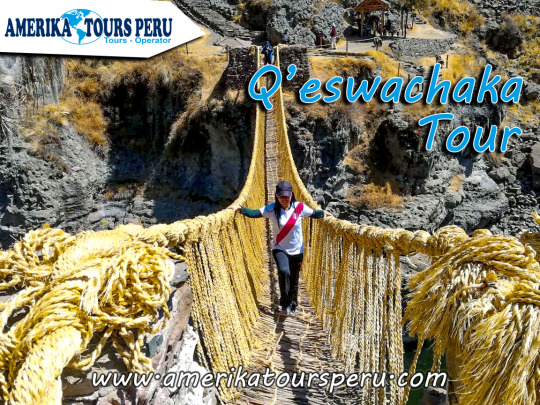
Tired, but with strength, on the third day, the villagers conclude with the assembly of the handrails and the bridge surfaces where the communities will cross.  Queshuachaca Tour
And finally, on the fourth day, they celebrate the reconstruction of the bridge to the sound of music with native dances, since the work is considered as a holiday by Peruvian ancestors.

lunes, 19 de agosto de 2019

Cusco Q’ueswachaka Suspension Bridge


The Suspension Bridge in Cusco declared universal heritage, also known as the bridge of the Inca Queswachaca; It is one of the most impressive legacies that can be seen these days, know this suspension bridge in Cusco, where the inhabitants still maintain and renew every year.


Empire of the Incas, fulfilled a very important function of unique cocexion with the other end even until the arrival of the Spaniards where the Queswachaca Bridge had resistance to pass a whole group of Spanish battalions.
More Information: Queswachaka tour
Hanging Bridge Cusco or Q'ueswachaka It comes from the Quechua word means Q'ueswa = Braid, Chaka = Bridge, the bridge is located above the Apurimac river, which is 15 meters high, the Q'ueswachaka bridge belonged to the network vial del (Q'apac Ñan), which is located on the route of the South Valley.
Our staff will be happy to help you complete your visit to this beautiful place, on our tour, we will also visit the 4 lagoons of Pomacanchi, Acopia, Asnapcocha, Pampamarca, our guide will make a detailed explanation of the importance of these places.
Therefore, if you are in Cusco do not hesitate to visit, the Q’ueswachaka Bridge 2019, it will be a great experience of all your trips.

jueves, 14 de marzo de 2019

QUESHUACHACA TOUR

QUESHUACHACA TOUR INFORMATION


In the morning we will pick you up from your hotel from 6:00 am to when we have finished, we will start the trip to the south of Cusco, following the route of Puno or Ruta del Sol, where we will take a detour to the town of Pomachanchis, where we will find the first lagoon very beautiful and the size of the valley of Cusco or city of Cusco, after you can take some pictures and appreciate the landscape we will go to take our snack that will bridara by the travel agency, then continue and visit the second lagoon just 10 minutes from the previous one, we will find the second lagoon and later we will find the third lagoon called mosoqllacta and finally we will go through the last called pampamarca. The characteristic of each lagoon is that it has towns along the coast where local people take advantage of fish consumption.
After visiting the four lagoons or circuit of the lagoons we will go to the province of yanaoca where the district of qewe and Inca bridge is, transporting us for 2 hours more we will arrive at our main destination called queshucahca or called Inca bridge, which We will have a considered time to take pictures and try to pass the bridge made of Andean straw or called ichu. Then we will have to rethrush to the designated camp to have lunch and then return to Cusco in the afternoon at approximately 6:00 p.m.

jueves, 17 de enero de 2019

QUESHUACHACA TOUR


In the morning we will pick you up from your hotel from 6:00 am to when we have finished, we will start the trip to the south of Cusco, following the route of Puno or Ruta del Sol, where we will take a detour to the town of Pomachanchis, where we will find the first lagoon very beautiful and the size of the valley of Cusco or city of Cusco, after you can take some pictures and appreciate the landscape we will go to take our snack that will bridara by the travel agency, then continue and visit the second lagoon just 10 minutes from the previous one, we will find the second lagoon and later we will find the third lagoon called mosoqllacta and finally we will go through the last called pampamarca. The characteristic of each lagoon is that it has towns along the coast where local people take advantage of fish consumption.
After visiting the four lagoons or circuit of the lagoons we will go to the province of yanaoca where the district of qewe and Inca bridge is, transporting us for 2 hours more we will arrive at our main destination called queshucahca or called Inca bridge, which We will have a considered time to take pictures and try to pass the bridge made of Andean straw or called ichu. Then we will have to rethrush to the designated camp to have lunch and then return to Cusco in the afternoon at approximately 6:00 p.m.