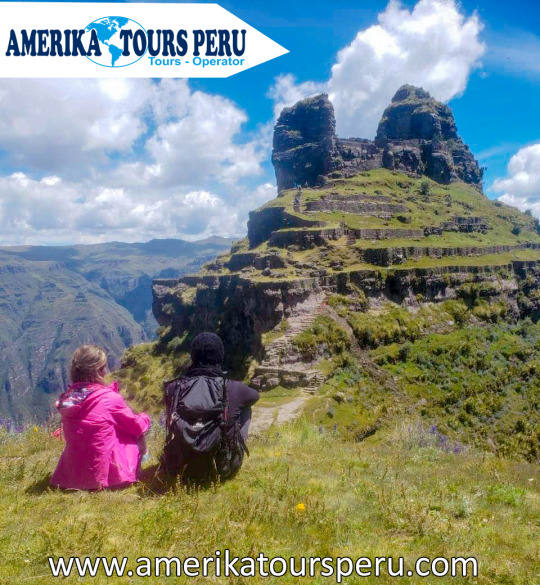
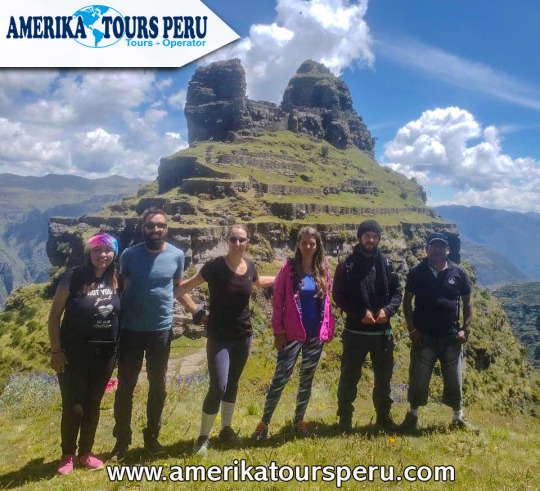
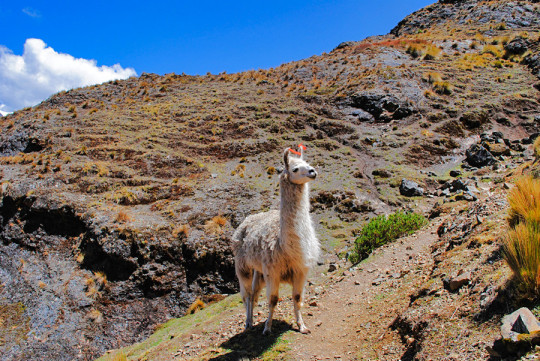
In runasimi "waqra" is horn and "pukara" is the equivalent of strength. Seeing the picture the name is more than eloquent. But the shepherds of the communities of Acos, to the south of the city of Cusco, also know him as Llamapukara: “they are not horns - they assure - they are the ears of a flame that is alert to the presence of foreigners”.
Despite its almost impregnable location - at the top of a peak over the chasms that overlook the Apurimac River canyon and over 4 thousand meters above sea level - at least four old roads lead to this fortress.
Undoubtedly, both "ears" or "horns" found in the fortress were cause for sacralization among its builders. The best preserved are its walls, stairs, terraces and finely carved stone rooms in the best classic Inca style.
For archaeologist Miguel Cornejo, Waqrapukara represents the “architecture of power. It is a first-class Inca sanctuary, which denotes immense political and religious power not yet deciphered, ”says Cornejo. “Before entering Waqrapukara, you reach a space formed by river and wind erosion. The whole natural environment warns from afar that a special place, out of the ordinary, of incomparable beauty is being reached, ”adds the PUCP archaeologist.
Waqrapukara is a good adventure and experiential tourism destination. The truth is that this route does not ask for tourists, it requires expeditionaries.
Unlike other destinations with many visitors, you can camp in the surrounding area in Waqrapukara. I recommend enjoying the night sky. You may find the reason why your former builders chose this magical and mysterious place.
How to get?
One of the routes to reach the Waqrapukara fortress is to go to the Pomacanchi district, province of Acomayo, which is approximately 115 km from the city of Cusco.
Arriving at the Chuquicahuana bridge, which is 92 km away, we head down the road to Acomayo. Arriving at the place called Cebadapata, we find the Pomacanchi Lagoon, which is the first tourist attraction, in this lagoon we can observe fishermen in small boats doing their daily work and the natural landscape with all the fauna and flora of the place.
In front of Cebadapata we can find the archaeological remains of K’ero, bastions, pre-Hispanic andenería, colcas and other constructions. In this way we arrive at Pomacanchi, the Ecotourism Capital of the Cusco Region, in this town we will find the house of Carmen Rosa Noguera, mother of the Caudillo José Gabriel Condorcanqui “Tupac Amaru”, who as we know started the Latin American Independence Revolution.
Why do some promote traveling to Waqrapukara through Pomacanchi?
Because we find attractive places, not only for the archeological remains of K'ero, the pre-Inca constructions in Conchacalla, the Pomacanchi Lagoon, the Huaca de K'ullupata, the vicuna reserve of Pumawasi but also for the fauna and flora, we will find species native such as achanqaray, qantu, chillka, t'ankar, ich'u, qeto qeto, panti, totora and other species. In the fauna we will find: Falcon, kestrel, eagle, condors, vicuñas, puma, deer, fox, skunk. The other advantage is that Pomacanchi is a colonial-style villa, as evidenced by its colonial bridges distributed throughout the district, its church also has accommodations for the traveler, such as the Municipal Lodging that has a dining room. On the way to the fortress we can enjoy the abundant wild vegetation of the area, spectacular view of the Apurimac Canyon and many other beauties.
Undoubtedly, both "ears" or "horns" found in the fortress were cause for sacralization among its builders. The best preserved are its walls, stairs, terraces and finely carved stone rooms in the best classic Inca style.
For archaeologist Miguel Cornejo, Waqrapukara represents the “architecture of power. It is a first-class Inca sanctuary, which denotes immense political and religious power not yet deciphered, ”says Cornejo. “Before entering Waqrapukara, you reach a space formed by river and wind erosion. The whole natural environment warns from afar that a special place, out of the ordinary, of incomparable beauty is being reached, ”adds the PUCP archaeologist.
Waqrapukara is a good adventure and experiential tourism destination. The truth is that this route does not ask for tourists, it requires expeditionaries.
Unlike other destinations with many visitors, you can camp in the surrounding area in Waqrapukara. I recommend enjoying the night sky. You may find the reason why your former builders chose this magical and mysterious place.
Once again the region of Cusco surprises us with a new wonder in its territory, the wonders that this region possesses are incalculable since it was the cradle of the vast and majestic Inca Empire, what we have left is to delight our view, to be amazed at the great architectural ingenuity of the Incas and of course take care of these wonders, the great legacy left to us by these fascinating men, now it's time to admire the mysterious wonder of Waqrapucara.
The name Waqrapukara comes from the Quechua voices: Waqra which means "horn" and Pukara which means "Fortress", we can deduce then that Waqrapukara means "Fortress of the horns", but there is an observation of this interpretation by the locals that indicate that the fortress has no horns, but that they are “the ears of a flame” adducing that it is always alert to what happens around it, therefore, they call it “Llamapukara”
The curves on the carved stone terraces seem to hold the Waqra, which resembles a double-billed crown. In the middle of it, there is a natural cave with Inca intervention and a small window that overlooks the abyss, which also allows a magnificent view of the night sky, populated with constellations, planets and stars of enormous value in the Inca worldview. It is at the top of a huge forest-covered ravine that crowns the chasms that overlook the Apurimac river canyon, the archaeological monument is surrounded by impressive platforms, squares and a forest of stones that resemble thrones, with mythological giants contemplating the mountain landscape.
You can do the tour to Wacrapukara through a walk that lasts about 1 hour and a half, whose difficulty is medium, it is not difficult and the effort will always be worth it when you get to observe the incredible architectural beauty, you can also do mountain biking since the nature of the place lends itself to this activity.
It was considered Cultural Patrimony of the Nation in 2017, we can affirm that Waqrapukara has nothing to envy to the best cultural tourism, adventure and high mountain destinations as well as an archaeological monument is a wonder, but we must add the landscape impact of its surroundings and the spectacular stone formations, when you arrive, the first thing is the astonishment, the landscape that surrounds Waqrapukara is one of the most spectacular in the Andean world. The high plateau wasteland is interrupted by the edges of an immense canyon. Fierce gusts of wind rise through the chasms forming capricious figures on the tops of the ravine. The Inca architects sought to dominate the landscape without transforming its spectacularity.
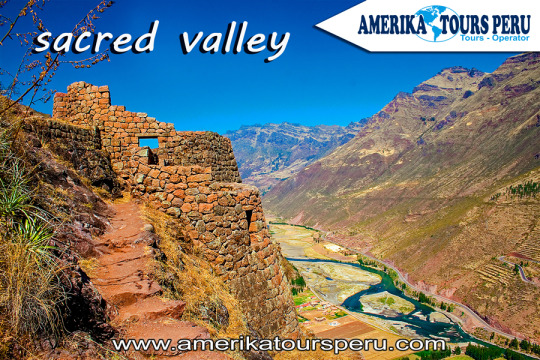
Named for being the main food supplier of the Inca empire, The Sacred Valley sits on the banks of the Urubamba River. This river in its beginnings has the name of Vilcanota, which comes from the Quechua word Wilcamayu or Sacred River. The Incas built archeological centers, along its banks, which replicated the constellations they knew of the Andean sky so that this contributes, even more, to the beauty of this charming valley.
The Sacred Valley of the Incas is located 35 kilometers from Cusco, and about 600 meters below the level of Cusco. It covers the part of the Vilcanota river basin between the towns of Písac and Ollantaytambo.
Between the months of April and October, at night the temperature drops considerably, in the early hours of the morning the tempreratura rises gradually until after noon.
Here are some suggestions of what you can do in the Sacred Valley
Canoeing in the sacred river of the Incas (Huillcamayo or Vilcanota). Appreciate and buy handicrafts at the famous craft fairs in Pisac, Ollantaytambo and Chinchero. Tour Moray, impressive agricultural laboratory of the Incas.
The Qhapaq Ñan, is the word that defines the road system of the Inca Civilization and is definitely the best material test, which can give us an idea of the magnitude of this empire, becoming one of the greatest achievements in indigenous America. An estimated 23 thousand km is calculated, although other studies say that up to 40 thousand km could be registered, from an extensive network of roads, built on one of the most rugged territories in the world, which communicates the cities and settlements of the state most important in America, before the Spanish invasion.
This network of roads crossed the Empire of the Incas, along roads drawn from north to south (from end to end) along the coast, mountains and jungle; through the Cordillera de los Andes, with small sections, which communicated from the east of its territory to the Pacific coast. Designed in harmony with the topography of the place, wide in some areas, very narrow in others, with completely cobbled sections and others simply of land.
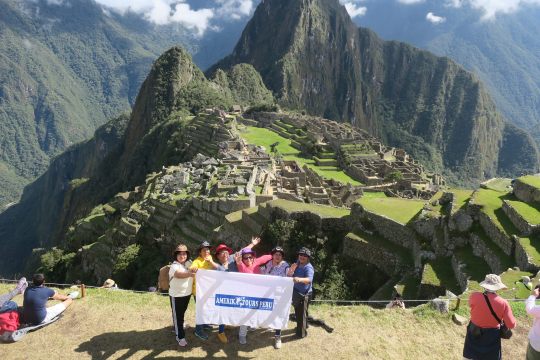
Like all the important cities of the Empire, the city of Machu Picchu, connected to Cusco (capital of the Empire), through the Inca Trail that we have traveled so far, at least two important accesses to the Sacred City (Inca Trail and Camino Salkantay), although there may be two others; one that descended through the Urubamba valley from Ollantaytambo, and another that crossed the high part of the Andes. And together with these, a complex network of secondary roads, to communicate the existing settlements throughout the region.
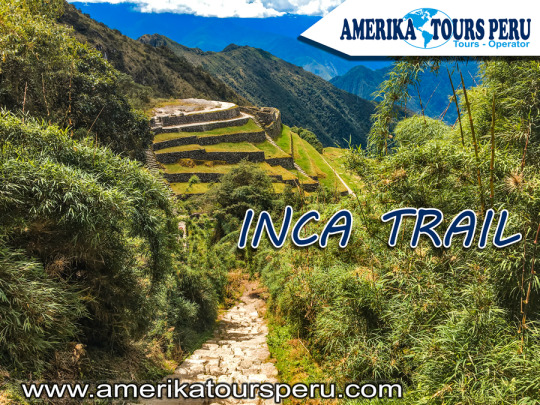
The world-famous Inca Trail to Machu Picchu, is only part of this complex network of roads, which goes up the Urubamba River basin to the Inca City, named for being the most suitable name. At present it is considered by many, the most beautiful of all, for the complement present between its landscapes and its history, you can visit it in three or four days, on a perfectly planned tour.
This Inca Trail to Machu Picchu, allowed to join production sites, with storage and administration centers. It is located in the middle of the jungle, which provides adequate environmental conditions for the production of specific foods. It is very likely that the entire Empire was supplied from this area. Therefore, this road articulated Machu Picchu with the capital and this with the other cities.
The gigantic network of roads of the Inca empire (Qhapaq Ñan) was built with the main purpose, to keep a huge territory communicated, this allowed to mobilize armies very quickly for the time. But it had other very important uses, as it served as trade routes, acting as an economic articulator, in a civilization with a tendency to redistribution and exchange, in the same way that Machu Picchu's corn or coca reached Huánuco, In Huánuco, surplus production (potatoes and others) was redistributed in other locations, such as Machu Picchu. Another extremely important purpose was the representation of the central power of the empire, as it was thought ideologically; -Yes, I know Cusco because I have seen the road- Then, the road was the essential ideological representation of the power of the Empire, both economic and ideological.
This path, a means of communication and transport par excellence, fundamental in economic articulation and ideological dissemination, was essential for the existence of such a vast territory. It crossed the central squares of the main towns of the Empire, joining places of worship, commerce and administration, passing through water sources, an element (fundamental for life) that symbolized the goodness of Mother Earth and the reproduction of life.
And despite the information available, the Inca Trail is only a small branch of the Empire's road network, an important tourist attraction in Peru and one of the largest in the world. Although the fact in itself, of knowing new places, what we offer is fantastic, goes beyond a visit to the Machu Picchu Sanctuary in Peru; We offer an approach to the culture of the people who built those places, to the people who currently inhabit those places, their customs and their history. So you can transform visible material evidence into an experiential learning experience.
The llaqta (city) of Machupicchu is an Inka political, religious and administrative center, which includes temples, platforms, houses and water channels.
Where it is located? The llaqta of Machupicchu is located in the district of Machupicchu, province of Urubamba, of the Cusco region, at the height of km. 112.5 of the railway line and it was a graben between the mountains of Machupicchu and Waynapicchu.
History and architecture Built during the first half of the fifteenth century, Machupicchu is divided into two large areas: the agricultural one that comprises a vast network of artificial terraces or terraces, and the urban one formed by various constructions and squares among which the temples of the Sun, of the Three Windows, of the condor and the main temple.
Important data: - The Historic Sanctuary - Machupicchu National Archaeological Park was included in the UNESCO World Heritage List as a mixed cultural and natural heritage, due to its exceptional universal value, considered as an important political, religious and administrative center of the Inca era.
- Its temperature ranges between 6.2 ° C 29.5 ° C, since it is located in a subtropical zone. Its rainiest months are from November to March.
- Its majestic architecture comprises about 140 structures throughout the Inka llaqta.
- The average altitude of the llaqta is 2 450 m.a.s.l.
- His scientific discovery is attributed to the researcher Hiram Bingham, who was in search of the last capital of the Incas of Vilcabamba.
- Machupicchu was declared "Historic Sanctuary of Peru" in 1981. General data
Machupicchu means old mountain, named for the location of the llaqta inka.
The architectural complex was built in the mid-fifteenth century and according to historians it would have been built at the request of the Pachakuteq inka.
The exact location is in the Machupicchu Pueblo district, province of Urubamba, 112.5 km northeast of the city of Cusco.
Machupicchu was interconnected with the entire Inka empire through the Qhapaq Ñan, known as the Inka Road Network.
Its annual temperature is 6.2º C minimum and maximum of 29.5º C.
The llaqta of Machupicchu has two defined zones: agricultural zone formed by the platforms and terraces, and the urban zone that fulfilled administrative functions.
The average altitude of the llaqta is 2,450 meters above sea level.
The mountains of Waynapicchu and Machupicchu are ideal for panoramic photographs of the entire archaeological complex.
Entrance Tickets Due to the growing flow of tourists who wish to visit the Machu Picchu Inka Llaqta and to ensure that their experience is memorable, it is recommended to organize the visit well in advance, for which the following should be taken into account:
• Buy tickets to enter Machupicchu in advance, for limited daily capacity, check availability at www.machupicchu.gob.pe (only official page). • In case you cannot make your purchase through the website you can make it in person at the ticket offices of the Deconcentrated Directorate of Culture Cusco - DDC, located at Calle Maruri N ° 340 (Palacio Kusicancha) and Calle Garcilaso s / n (side of the Regional Historical Museum) from Monday to Saturday between 07:00 - 19:30 hours (does not attend holidays). The sale of admission tickets is subject to availability. • The Decentralized Directorate of Culture in Machupicchu Pueblo is the last point of sale, so a last minute purchase will mean subject to the availability of remaining spaces in the system, also the payment is only in soles and cash. Credit cards, debit cards or payment in dollars are not accepted. • The purchase of a student ticket is in person or through a travel agency prior to the presentation or remission of a valid student card. ISIC card is not accepted. • Entry to SHM - PANM is from the time indicated on the ticket, so early admission is not allowed. • Bring printed the entrance ticket to Machupicchu. • Before entering the llaka inka make use of the hygienic services, since the visit will last an average of 2 to 4 hours (There are no hygienic services within the llaqta). • Re-entry is only allowed for visitors who have a visit to the mountains of Machupicchu and Waynapicchu, and entrance tickets for the mountains can be purchased in advance through the website www.machupicchu.gob.pe, they are also subject to availability, taking into account that the maximum allowed entry capacity is 400 visitors per day for each mountain, divided into two groups of 200 visitors per shift.
Forced by circumstances - competition, mass tourism - Cusco operators point to the south, whose quality destinations are only visible. However, years ago, visionary agencies such as Pukupuku Travel (Facebook Pukupuku Travel) explored that territory and positioned new routes long before the Sacred Valley overcame. http://bit.ly/amerikatoursperu
Needless to say, we did not enjoy the cosmopolitan Cusco night, because at 4 in the morning he picked us up from the Ricardo Reátegui Hotel (T. 959136848), one of the top guides in the region. It was cold in Huayqui, the starting point, but as soon as we started beating for a majestic puna we went into heat. We do not cross any tourist, only shepherds taking care of their flocks, and this route is more for travelers in search of spirituality drowned in commercial tours.
Suddenly, an amazing hollow interrupts the altiplanic plain. With astonishment, the archaeologist Miguel Cornejo tells him, who investigated the place in 2010: “Before entering Waqrapukara, you reach a space formed by river and wind erosion. The whole natural environment warns that a special place, out of the ordinary, of incomparable beauty is being reached ”.
The abyss that forms the Apurimac River is the cherry of the cake and makes Waqrapukara (4,104 m.a.s.l.) one of the most spectacular landscapes in the Andes. Inca architects molded their buildings to geography. "It is a first-class Inca sanctuary, which denotes immense political and religious power not yet deciphered," adds Cornejo.
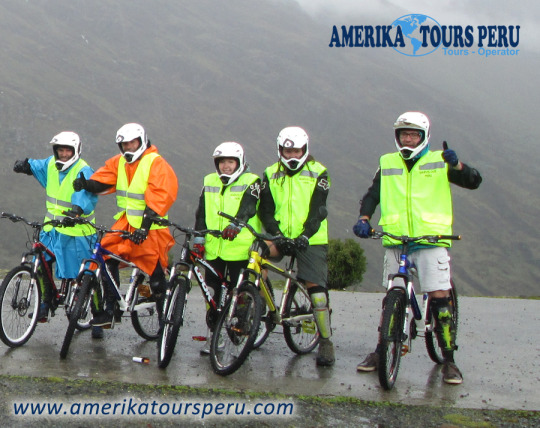
Enjoy a half-day mountain bike tour on Abra Malaga in the Sacred Valley of Peru. This trip is a stunner. During the 5,000 feet of all-downhill biking, you will likely see herds of llamas, the massive glacier of Veronica, waterfalls, and authentic Andean lifestyles of simple stone huts and potato farms. This is the continental divide of South America, since, from here going eastward it drops nearly 20,000 feet down to the Amazon jungle basin, and the views here are outstanding. This section of highway has been described by many as one of the most beautiful in South America. By far one of the most popular mountain bike trips in the area, and with very good reason – it is over 5,000 feet of pure descent on a beautifully paved road.
Your tour starts in Ollantaytambo from where you'll drive one hour up the road to the pass of Abra Malaga, which lies at nearly 14,500 above sea level and at the foot of the massive glacier of Veronica (17,500 feet). From there, you begin a 50 kilometer descent that is one of the longest possible in the world, through gorgeous terrain. This ride is all downhill on a smooth paved road, and is truly suitable for anyone who can ride a bicycle. We have done this trip for nearly ten years and have successfully completed it hundreds of times.This ride fun. Everyone who does it loves it, due to the culture and scenery. It is a great mountain bike ride, perfect for those who love mountain biking. For those with extensive off road experience, there is a international DH course just meters away from the main road (extra cost and logistics are involved, ask for details).
LARES TREK
The Lares Trek is an off-the-beaten trail that begins near the town of Lares, 40 miles north of Cusco and 35 miles south east of Machu Picchu (see map below). The trek itself lies in the Lares Valley, east of the Urubamba mountain range, which traverses part of the Sacred Valley.
The trek can be completed as a standalone 2 or 3 day trail, or be incorporated with a visit to Machu Picchu - extending the tour by 1 or 2 days. The latter option is fast becoming a popular itinerary for trekkers due to the limits of the Classic Inca Trail to Machu Picchu.
Permits are not required for the Lares Trek. This means that you will arrive in Cusco and depending on the season (not June-August).
Of course you will need to book your train tickets to Aguas Calientes as early as possible during peak season, as well as your entrance tickets to Machu Picchu.
In terms of the current route itinerary, there are in fact a number of variations on the Lares Trek, most end at Ollantaytambo.
From here trekkers can catch a train to Aguas Calientes to visit Machu Picchu or indeed return to Cusco. We discuss each Lares Trek route variation in some detail below.
There are a number of factors that make this trek to great alternative to the Classic Inca Trail.
Firstly, and perhaps most importantly for some, that is a lot quieter than than Inca Trail.
Secondly, the route is arguably easier than the Inca Trail in that one does not need to deal with as many steps.
Altitude is still an issue and on some route you will need to deal with 3 high altitude passes that are over 4,200 meters (the highest, depending on your route is either 4,400 meters or 4,600 meters).
DAY 1: CUSCO- QUESIUNO- JAMPA Pick-up times in Lodgings: • Private Transportation: 06:00 A.M. • Shared Transportation: 03:00 A.M - 4:00 A.M. Our pickups start from 06:00 a.m. (private transport) or 03:00 to 04:00 (shared), depending on the service contracted from their respective lodgings, to direct us to Urcos, bordering the Vilcanota river to reach our destination that will be the community of Quesiuno (3 hours by car) where we will receive our breakfast in the camp, after that we will travel about 20 min. more by car to start our journey through a part of the Andes, observing the wonderful Apu Ausangate on your side, after a 3 hour walk, we will go to our base camp, located in the hampa community, where they will receive your dinner and small information for the next day.
DAY 2: CCAMPA- 7 LAGOONS- PACCHANTA
In the morning (06:00 am) we will start preparing for our breakfast at 07:00 am, after that we will start our hike to the 7 lagoons of Ausangate (4 hours approx.), Where you can observe the existing biodiversity in the place and in addition to those appreciate these beautiful turquoise lagoons, we will do one for about 1 to 2 hours to receive lunch and then we start our trekking to the town of "PACCHANTA" (2 hrs.). The community of "PACCHANTA" is located on the slopes of the snowy "Ausangate", at 4200 masl. Its inhabitants, who are dedicated to the raising of alpacas and the cultivation of native tubers, are all expert weavers. With the fiber of the alpaca they make their clothing and use their meat as a source of protein. Native potatoes, fresh or traditionally converted into chuño and moraya, provide the carbohydrates they need to fight against cold and physical exertion. Here is where we will set up our camp and then you can enjoy some refreshing and replenishing thermal baths located in the same community. Dinner, rest and small information for the next day.
DAY 3: PACCHANTA - UPIS - YANACOCHA LAGOON
In the morning (06:00 a.m.) we will begin to prepare for our breakfast at 07:00 a.m., to begin our journey in the middle of mountains and colors towards the town of Upis (2 hrs and a half), where we will receive our lunch. During the journey we can see different types of turquoise lagoons in the middle of these wonderful mountains, such as: "Azul cocha, Puccacocha and Ccomercocha", after 3 hours walking and enjoying the scenery, we will arrive at a beautiful lagoon called Yanacocha, in which our camp will be located. Dinner, rest and small information for the next day.
DAY 4: YANACOCHA LAGOON - ANANTA
Our fourth day will start early (06:00 a.m.), to prepare for our nutritious breakfast at 07:00 a.m., and start saying goodbye to this wonderful lagoon. We will walk approximately 5 hours to reach the town of Ananta, where you will have the afternoon free to share and explore the surroundings of this beautiful landscape, since our camp will be in this same place. Dinner, rest and small information for the next day.
DAY 5: ANANTA - RAINBOW MOUNTAIN - CUSCO
Very early in the morning (05:00 AM) we will get up and prepare for our nutritious breakfast (06:00 AM) and begin our adventure towards the wonderful "RAINBOW MOUNTAIN", step of 5,029 meters above sea level, where you can see beautiful landscapes , lagoons where South American camelids (alpacas, llamas and vicuñas) and other species of mammals such as pumas, Andean birds, condor etc. live. The place called Montaña VININCUNCA, is where you can see the wonderful colorado hill with the sunrise shows its best impressive valley and colored hills of magical colors that only exists in this place in Peru. Around you can see mountains like Apu Sarinini and "Montaña Ausangate", with a height of 6,372 m.s.n.m. being one of the highest in Cusco. In the Inca mythology of this mountain and the nearby lakes - among which Sivinacocha stands out, from where the masculine energy that fertilizes the sacred earth mother Pachamama is born. We will be visiting the Mountain of Colors approximately 30 minutes, in which our guide will give us a small explanation of their surroundings and take some pictures of this wonderful landscape. After this wonderful experience, we will begin our descent (2 hrs and 30 min approximately) to the town of quesiuno, observing the wonderful landscape it offers us and the small towns that are there and live in this wonderful valley, upon arrival we will receive our exquisite lunch buffet, which consists of typical Peruvian food, then pack and return to Cusco around 19:00 hrs. approximately.
TYPE OF TOUR: Hike. PLACES TO VISIT: 07 Lagoons, Ausangate. DURATION OF THE TOUR: 01 Day. AVAILABILITY: All Year. MAXIMUM ALTITUDE: 5000mt. DIFFICULTY: Moderate.
The billion colors of Ausangate is in this magnificent walk of Ausangate Lagoons, it is a beautiful day tour, where you can see several turquoise-colored lagoons, belonging to the Cordillera de Vilcanota and also be near the Ausangate mountains and the Qayangates. To reward the tour, you have the opportunity to enjoy the wonder of the Andes, the relaxing thermal waters with a beautiful view of the mountains and the daily life of the Pacchanta community.
Day 1: Cusco - Tinke (3950 m.) - Pacchanta (4200 m.) - Lagoons (4850 m.) - Cusco At 4.00 in the morning, we pick you up from the hotel and go out to the town of Pacchanta. We'll get to Tinke and we'll take a break. The Tinke tour takes approximately 45 minutes to reach Pacchanta where a delicious breakfast will be waiting for us. From this place we will begin to walk riding towards the beautiful lagoons of Ausangate.
ITINERARY OF TOUR
We will have a five-hour hike visiting the lagoons of Azulcocha, Otorongo, Pucacocha, Alqacocha and Q'omercocha, we can also appreciate the Ausangate mountains (6834 m.), Mariposa (5842 m.), Jampa (5500 m.), Pucapunta ( 5740 m), Caracol (5625 m.), Tinke (5300 m.) And the whole Qayangate Mountain Range, we will also see birds, alpacas, llamas, many vizcachas and with luck until the Andean Condor. After making a circuit we will return to Pacchanta to enjoy the hot springs. We will end the day in the relaxing hot springs of Ausangate. Ideal to relax the muscles of the body. After a buffet lunch We will go to Cusco. We arrived at the city of Cusco at seven o'clock at night. End of our services.
Meals: Breakfast, Lunch Maximum altitude: 4,850 meters / 15912 feet Minimum altitude: 4,300 meters / 14107 feet Travel time: 3.5 hours one way (car) + 5 hours (ride) + 3.5 hours return (car) Approximate walking distance: 15 km (ride)
Rainbow Mountain hike 2 Days is new route which includes a part of the Ausangate route, it is an adventure that will take your breath away constantly. With a combination of wild mountain landscapes, glaciated peaks, rushing rivers and challenging mountain passes, everything seeming untouched and undiscovered.
- PRIVATE TRANSPORT:
• $225 p/p (Mínimo 2 pax)
• $200 p/p (Mínimo 3 pax)
• $180 p/p (Mínimo 4 pax)
• $150 p/p (Mínimo 5 pax)
- SHARED TRANSPORTATION:
• $160 p/p (Mínimo 2 pax)
• $130 p/p (Mínimo 3 pax)
• $110 p/p (Mínimo 4 pax)
• $80 p/p (Mínimo 5 pax)
DAY 1: CUSCO - CHECACUPE - QUESIUNO - AUSANGATE LAGOON PICK-UP TIMES IN LODGINGS:
• Private Transportation: 06:00 A.M.
• Shared Transportation: 03:00 A.M - 4:00 A.M.
Our adventure begins around 03:00 AM to 6:00 AM (Depending on the service you have hired), picking it up at your respective lodging and then heading to the picturesque town of "Checacupe" where you will receive a nutritious and energizing breakfast (08:00 AM-09: 00 AM approx.); later we will visit two very important places within the history and culture of "Checacupe", one of them is the "COLONIAL BRIDGE OF CHECACUPE", built in the XVII century, its structure is lime and singing, it makes the shape of a semicircular arch , mounted on its solid walls of natural rocks. The bridge is located on the river Ausangate or Pitumayu; adjacent to the bridge you can see the foundations of an Inca bridge, and another one of rails from the time of the republic. This bridge fulfilled its function for many years giving way to the first coal engines that arrived from Arequipa to Cusco; Then we will go to the "CHECACUPE TEMPLE", its construction dates from the sixteenth century, until the early eighteenth century. Its adobe walls were decorated internally with almost entirely murals which have themes such as the face of the Immaculate Virgin considered as the oldest painting in Cusco.
After visiting these two important buildings of the town, we will go to the town of "QUESIUNO", town that is in the midst of multicolored landscapes, mountains, snow and Andean animals such as llamas and alpacas, to start our journey to the lagoons that are around the majestic "APU AUSANGATE" (10:00 to 10:30 AM approx.), after about seven kilometers of walk from the town of quesiuno, we will visit our first lagoon where we will be around an hour to enjoy the landscape, the majesty of the mountains and our delicious lunch prepared by our chef. At the end of our meal, we will walk approximately four kilometers more, enjoying the landscape, lagoons, colors and surroundings to reach our base camp, where we will have free time, we will have dinner and spend the night, to rest and recover energy for the next day .DAY 2: AUSANGATE LAGOON - RAINBOW MOUNTAIN - QUESIUNO - CUSCO
Very early in the morning (05:00 AM) we will get up and prepare for our nutritious breakfast (06:00 AM) and begin our adventure towards the wonderful "MONTAÑA DE COLORES", step of 5,029 meters above sea level, where you can see beautiful landscapes , lagoons where South American camelids (alpacas, llamas and vicuñas) and other species of mammals such as pumas, Andean birds, condor etc. The place Called Montaña VININCUNCA, it is from where you can observe the wonderful colorado hill with the sunrise shows its best impressive valley and colored hills of magical colors that only exists in this place of Peru. Around you can see mountains like Apu Sarinini and "Montaña Ausangate", with a height of 6,372 m.s.n.m. being one of the highest in Cusco. In the Inca mythology of this mountain and the nearby lakes - among which Sivinacocha stands out, from where the masculine energy that fertilizes the sacred earth mother Pachamama is born. We will be visiting the Mountain of Colors approximately 30 minutes, in which our guide will give us a small explanation of their surroundings and take some pictures of this wonderful landscape. After this wonderful experience, we will begin our descent (2 hrs and 30 min approximately) to the town of quesiuno, observing the wonderful landscape it offers us and the small towns that are there and live in this wonderful valley, upon arrival we will receive our exquisite lunch buffet, which consists of typical Peruvian food, then pack and return to Cusco around 19:00 hrs. approximately.
DAY 1: CUSCO-ABRA MALAGA-SANTA MARÍA
The first day starts early in the morning; we will pick you up from your hotel between 6:30 to 7:00 am. For two hours we cross through the Sacred Valley of the Incas. A very famous Valley due it is the leading producer of vegetables in the Cusco region, besides to host imposing Inca palaces and buildings. During the route we stop for 30 minutes in Ollantaytambo village, where we have breakfast and buy some candies, chocolates, cookies, and energizantes, we will continue driving for 1 more hour until arriving to Abra Malaga pass , located at 4350 m.a.s.l.From where we will descend with bicycles for around 3 hours observing small towns, fruit plantations, rivers and creeks until arriving to the town of Huamanmarca, where we catch again the car that will transport us for 30 more minutes to Santa Maria town, where we will have lunch and will keep our personal stuff in our respective rooms, because here we will spend the night. In the afternoon at 15:00 pm you can go to do river rafting (not included/optional). 2 hours of full adrenaline and fun into the Urubamba river of lll and IV level. After finishing rafting we will come back to Santa Maria where we have dinner and spend the night.
DAY 2: SANTA MARÍA-QELLOMAYO-SANTA TERESA.
We will wake up at 6:00 am and after our breakfast we will start hiking, this day will be the longest but also very interesting, we will cross through widespread crops of oranges, coffee, cacao, coca, soursop, pineapple, etc.Besides observing in the route animals of the high jungle with which you will have the opportunity to interact.The 2 first hours you will hiking on a flat surface, then you will uphill 2 hours until the summit, from where you will have an amazing view of the Quillabamba valley and also from where we will descend on original Inca Trail until arriving Qellomayo town, where we will have lunch and resting time.Then we will continue hiking 2 more hours next to river bank until arriving to la Oroya , The Oroya is a basquet with wires that we will use to cross the river and to get into to the Cocalmayo thermal baths , where we will be 2 hours. After it we will go by car for 30 minutes to Santa Teresa town where we have dinner and we spend the night.
DAY 1: SANTA TERESA-HIDROELÉCTRICA-AGUAS CALIENTES.
We wake up at 8:00 am and after breakfast we will go to zip lining (not included/optional).After zip lining we will catch the car that will transport us to the town of Hidroelectrica, where we have lunch and resting time, in the afternoon we will continue hiking for 3 more hours next to the train railway, where we will observe beautiful landscapes until arriving to Aguas Calientes town where we will spend the night. Hiking distance: 14 Km / 8.75 miles (3-4 horas). Altitude of the third stay: 2000 metros sobre el nivel del mar. (casa familiar).
DAY 4: AGUAS CALIENTES- MACHUPICCHU-CUSCO.
This day will be for sure the most fascinating for you, because you will see Machupicchu in all its glory from dawn. We get up at 5:00 am and after our breakfast we will go to the bus station for boarding the first bus that leaving at 5:30 am to be in Machupicchu at 6:00 am. Inside Machupicchu we will have 2 hours guided tour where you will visit the most remarkable places such as: el torreón semicircular, el templo de las tres ventanas, el intihuatana, el templo del cóndor, la sala de los morteros y el baño del inca. Then you will have free time to explore Machupicchu by your own or descend to Aguas calientes (Lunch in not included). In the afternoon you will board the train from Aguas calientes to Ollantaytambo, place from where you will be transported by touristic bus to Cusco. Estimated arrival to Cusco (20:00 pm).
Our adventure begins around 04:30 AM - 05:00 AM (Depending on the service you hired there), picking it up at your respective lodging, to go from Cusco to the town of "Hanchillpacha" (2 hrs. And 30 min. Approx.), Where our restaurant is located, in which you can enjoy our nutritious and energizing breakfast before starting the tour, after this we will get on the car to enter about 25 min. Approximately, and start preparing for the adventure. We will arrive at the control point and begin our walk, it will be approximately 6 kilometers approximately (2 hrs and 30 min.) To visit the wonderful "Mountain of colors", we will be there approximately 30 minutes, for a brief explanation and to take photographs, to Then return by the same route and get on our transport, which will take us back to our restaurant to enjoy a delicious buffet lunch, which consists of typical Peruvian food. We will be returning to cusco (Private and Shared Service), between 17:30 hrs. at 7:00 p.m., leaving them in the case of private service at your hotel and if it is a shared service in the Plaza Regocijos.
DAY 1: CUSCO - CHECACUPE - QUESIUNO - AUSANGATE LAGOON
Our adventure begins around 03:00 AM to 6:00 AM (Depending on the service you have hired), picking it up at your respective lodging and then heading to the picturesque town of "Checacupe" where you will receive a nutritious and energizing breakfast (08:00 AM-09: 00 AM approx.); later we will visit two very important places within the history and culture of "Checacupe", one of them is the "COLONIAL BRIDGE OF CHECACUPE", built in the XVII century, its structure is lime and singing, it makes the shape of a semicircular arch , mounted on its solid walls of natural rocks. The bridge is located on the river Ausangate or Pitumayu; adjacent to the bridge you can see the foundations of an Inca bridge, and another one of rails from the time of the republic. This bridge fulfilled its function for many years giving way to the first coal engines that arrived from Arequipa to Cusco; Then we will go to the "CHECACUPE TEMPLE", its construction dates from the sixteenth century, until the early eighteenth century. Its adobe walls were decorated internally with almost entirely murals which have themes such as the face of the Immaculate Virgin considered as the oldest painting in Cusco.
After visiting these two important buildings of the town, we will go to the town of "QUESIUNO", town that is in the midst of multicolored landscapes, mountains, snow and Andean animals such as llamas and alpacas, to start our journey to the lagoons that are around the majestic "APU AUSANGATE" (10:00 to 10:30 AM approx.), after about seven kilometers of walk from the town of quesiuno, we will visit our first lagoon where we will be around an hour to enjoy the landscape, the majesty of the mountains and our delicious lunch prepared by our chef. At the end of our meal, we will walk approximately four kilometers more, enjoying the landscape, lagoons, colors and surroundings to reach our base camp, where we will have free time, we will have dinner and spend the night, to rest and recover energy for the next day . DAY 2: AUSANGATE LAGOON - RAINBOW MOUNTAIN - QUESIUNO - CUSCO
Very early in the morning (05:00 AM) we will get up and prepare for our nutritious breakfast (06:00 AM) and begin our adventure towards the wonderful "MONTAÑA DE COLORES", step of 5,029 meters above sea level, where you can see beautiful landscapes , lagoons where South American camelids (alpacas, llamas and vicuñas) and other species of mammals such as pumas, Andean birds, condor etc. The place Called Montaña VININCUNCA, it is from where you can observe the wonderful colorado hill with the sunrise shows its best impressive valley and colored hills of magical colors that only exists in this place of Peru. Around you can see mountains like Apu Sarinini and "Montaña Ausangate", with a height of 6,372 m.s.n.m. being one of the highest in Cusco. In the Inca mythology of this mountain and the nearby lakes - among which Sivinacocha stands out, from where the masculine energy that fertilizes the sacred earth mother Pachamama is born. We will be visiting the Mountain of Colors approximately 30 minutes, in which our guide will give us a small explanation of their surroundings and take some pictures of this wonderful landscape. After this wonderful experience, we will begin our descent (2 hrs and 30 min approximately) to the town of quesiuno, observing the wonderful landscape it offers us and the small towns that are there and live in this wonderful valley, upon arrival we will receive our exquisite lunch buffet, which consists of typical Peruvian food, then pack and return to Cusco around 19:00 hrs. approximately.
This abandoned city has lots of similarity with Machu Picchu and there are a variety of theories about its origin. It is relatively clear, it is said that there are many areas to discover, so visiting it is a true adventure and mystery.
Huchuy Qosqo Trek is perfect if you want to do a hike in the mountains observing the beautiful landscapes and wildlife of the Urubamba Mountain Range in the Andes of Cusco. This hike is one of the excellent and popular alternative treks to Machu Picchu.
Choquequirao Trek to Machu Picchu is one of the most beautiful and interesting treks on offer in the Cusco. Following little visited pathways and one Inca Trail, beautiful scenery, this trek has it all !!! The trek begins following the regular route for Choquequirao and and continue through different paths until you reach Machu Picchu.
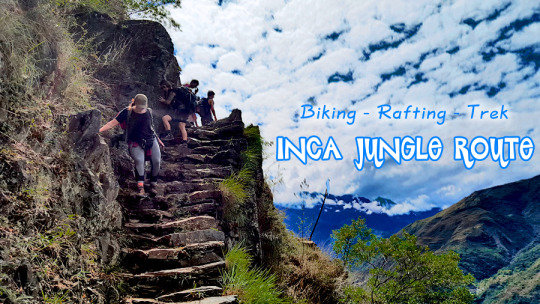
Our Inca Jungle is one of the most enjoyable Adventure Tours that you can find in the Cusco region. Over 4 days, this adventure offers you biking, rafting, trekking and zip line. we assure you that “It is the most complete tour ever in Cusco.” Machu Picchu, For sure this adventure is a beautiful and unforgettable experience.
Our Lares Trek is less-known hike departs from the Sacred Valley to enter a route where wonderful mountain scenery, lagoons, valley cloud-forest and authentic Quechua communities are combined in the landscape, where you can end the trek by relaxing in its famous hot springs of Lares (or vice versa), from here we drive to Ollantaytambo and board the train to Aguas Calientes to visit Machu Picchu on the 4th day.